

- Turn. Don’t chain.
- Single crochet into the first stitch.
- Insert your hook into the bar on the side of that stitch and single crochet again.
- Do it once more. 3 stacked = as tall as a double crochet.
- Work your next double crochet into the 2nd stitch.
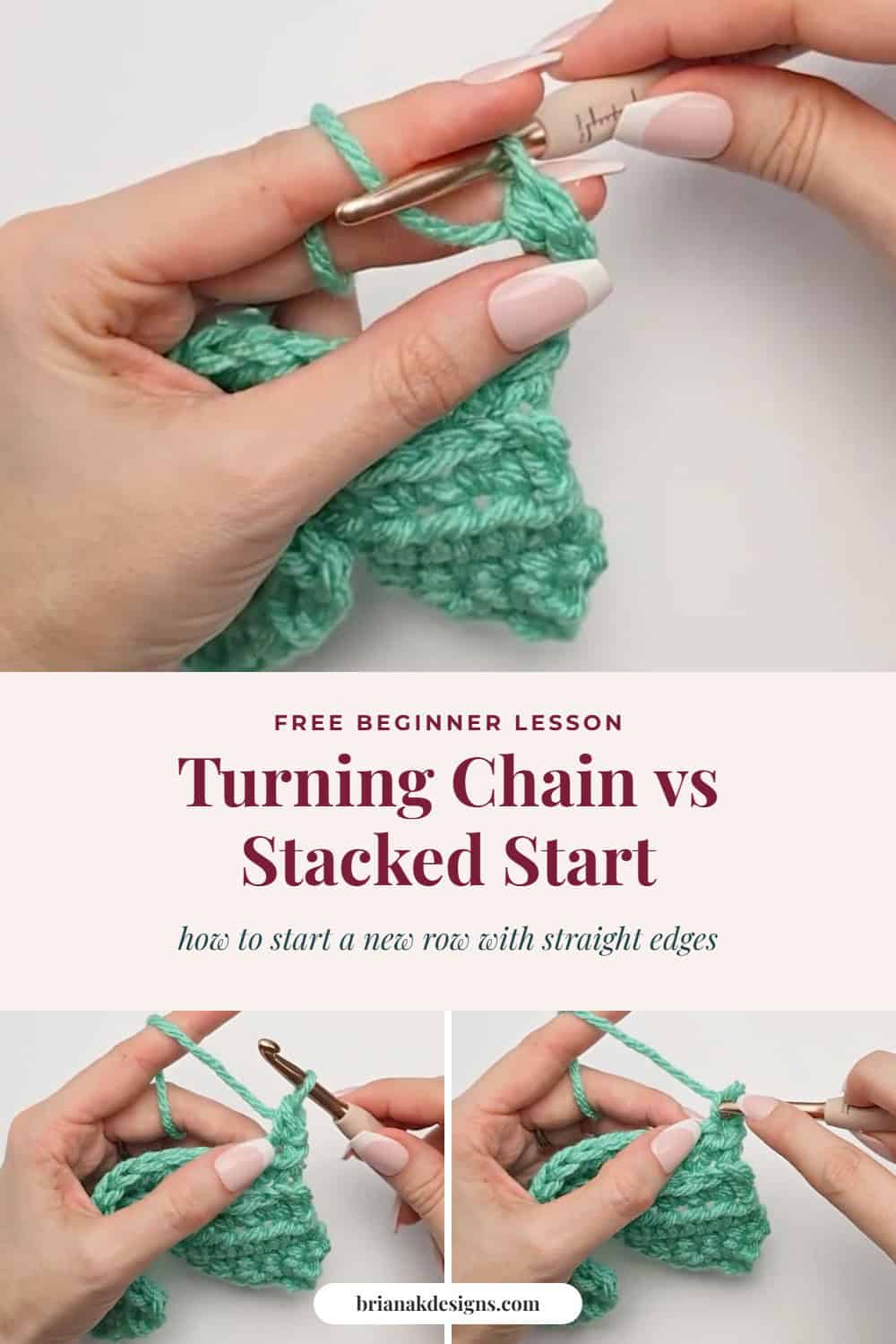
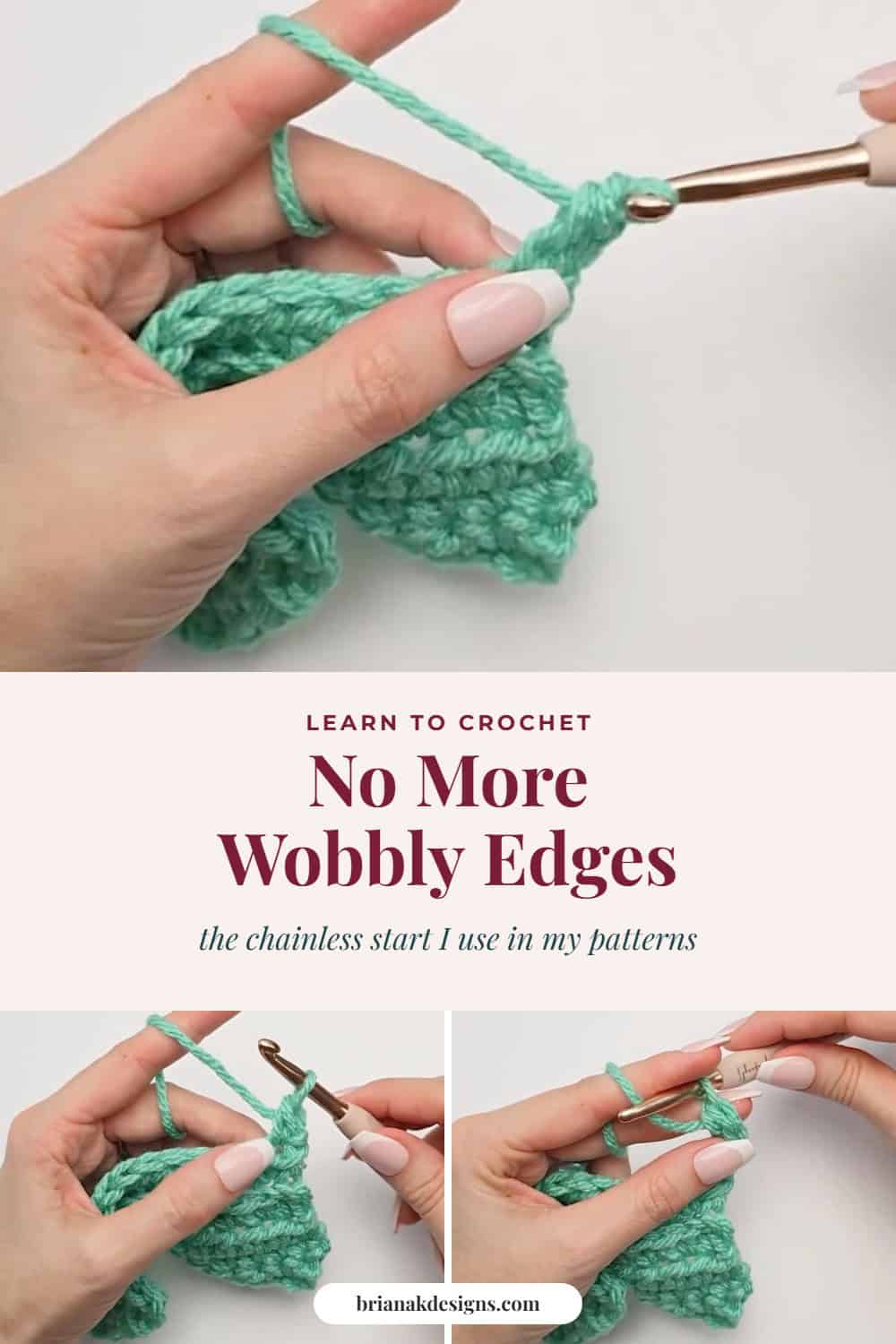
Every time you turn your work, the first stitch of the new row has to climb up to the height of the stitches in that row. You’ll see two ways to do it. The classic way is a turning chain. My way is a chainless stacked start, and it’s the reason my edges went from wobbly to straight. In this lesson, you’ll learn both, so you can follow any pattern and still get clean edges.
This lesson is part of my free How to Crochet for Beginners series, and it follows my book Crochet for Beginners. You should already know how to make a slip knot and a chain, and how to work single, half double, double, and treble crochet.
What You Need
- Yarn: I’m using Crochet.com Brava Bulky in mint for this whole series. Any smooth, light-colored yarn works. Dark and fuzzy yarns hide your stitches.
- Hook: a 6 mm hook. I recommend Crochet.com Dots hooks for beginners. The hook you see in my videos is from Heart Hook Home. Not sure which size you have? My crochet hook size chart has every size.
- A stitch marker (optional) to mark the first stitch of each row. Need the full starter kit? Here’s my beginner crochet supplies list.
What Is a Turning Chain in Crochet?
A turning chain is a short chain at the start of a row. It lifts your yarn up so the first stitch of the row is the same height as the rest. Taller stitches need more chains. Patterns shorten it to t-ch or just tell you to “ch 3 and turn.”
Most patterns, especially older ones, are written with turning chains, so you need to know how they work. The catch? A chain is thinner than a real stitch. It often leaves a gap or a loose bump at the edge, and it’s easy to lose track of, which is how edges start slanting.
Turning Chain Chart: How Many Chains for Each Stitch
| Row of | Turning chain | Chainless start |
|---|---|---|
| Single crochet (sc) | ch 1 | None. Just sc into the first stitch. |
| Half double (hdc) | ch 2 | Stacked single crochet (2 sc stacked) |
| Double crochet (dc) | ch 3 | Stacked double crochet (3 sc stacked) |
| Treble (tr) | ch 4 | Stacked treble (4 sc stacked) |
| Double treble (dtr) | ch 5 | Stacked double treble (5 sc stacked) |
These are the standard US numbers. A UK pattern uses the same chains, just with UK stitch names (a UK treble is a US double crochet, so it still gets a chain 3). If your chain 3 looks loose and loopy, try a chain 2. Many crocheters do.
Which start does my row need?
Turning chain: chain 3, then turn. Stacked start: 3 single crochets stacked.
Does the Turning Chain Count as a Stitch?
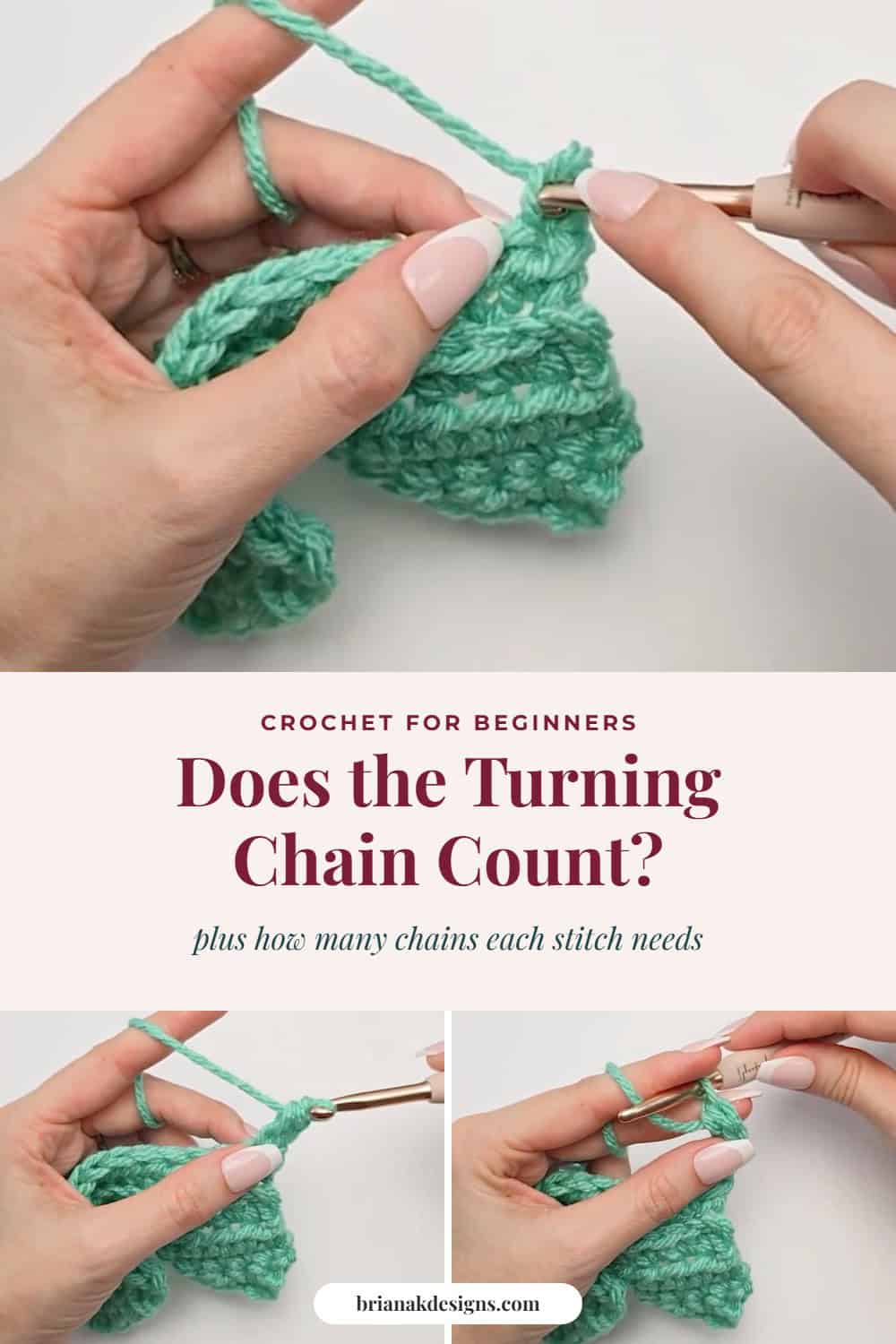
This is the question that trips up almost every beginner. Here’s the usual rule:
- Chain 1 for single crochet doesn’t count. Work your first single crochet into the first stitch.
- Chain 3 for double crochet and chain 4 for treble usually count. Skip the first stitch and work into the 2nd. At the end of the next row, your last stitch goes into the top of that turning chain.
- Chain 2 for half double crochet goes both ways. Designers differ, so check the pattern.
Your pattern always wins. Look for a note like “ch 3 (counts as dc)” or “ch 2 (does not count as a st)” at the start of the row.
Briana’s Tip
If your pattern says the turning chain counts as a stitch, the stacked stitch counts as that same stitch. Your stitch count doesn’t change.
My Way: the Stacked Start (Chainless Start)
Instead of chaining, you build the first stitch straight up from the row below by stacking single crochets on top of each other. It looks like a real stitch instead of a thin chain, so your edges come out straight and even. This is what I use in all of my own patterns, and once you’re comfortable, you can swap it in for a turning chain in almost any pattern worked in rows.
You may also see this called a chainless starting double crochet. The idea is the same: no chain, a real stitch at the edge.
How to Crochet a Stacked Double Crochet, Step by Step
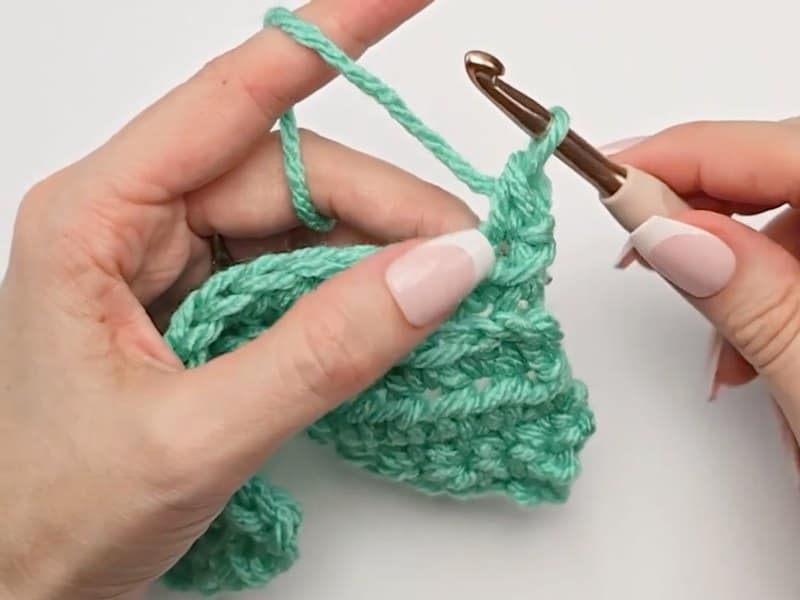
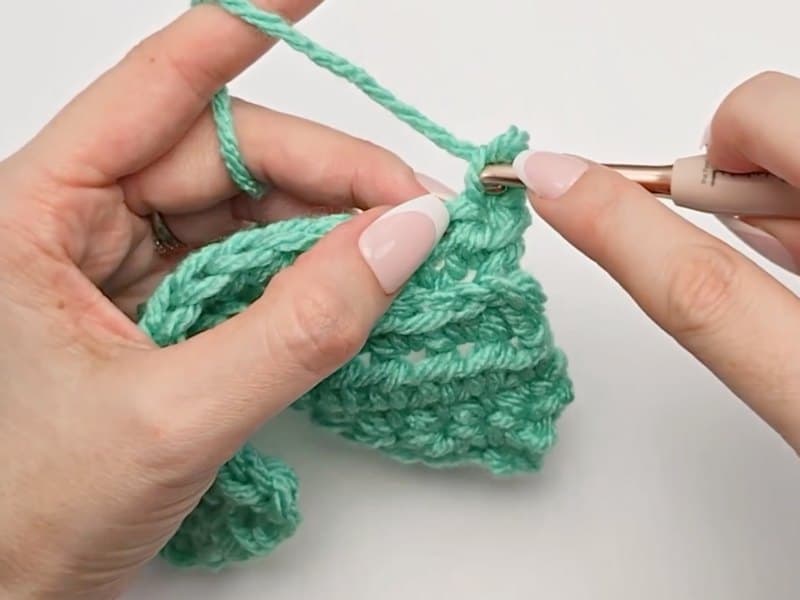
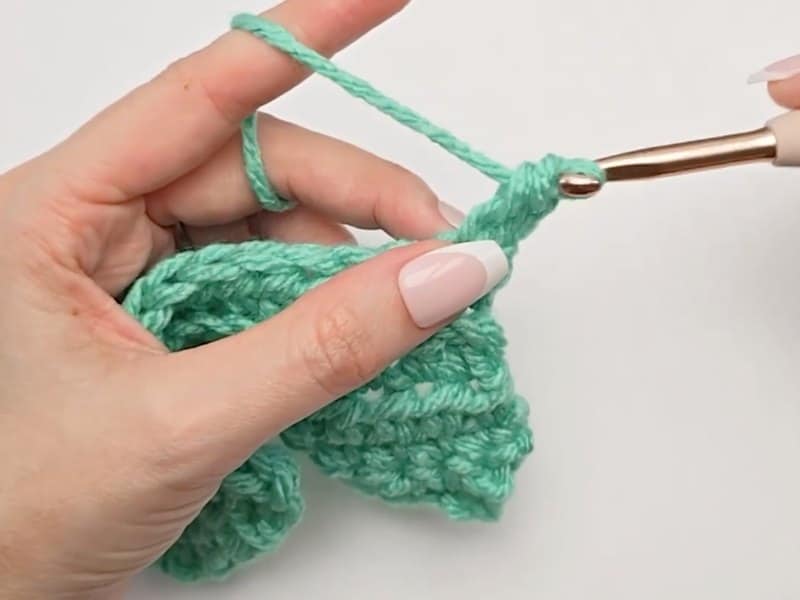
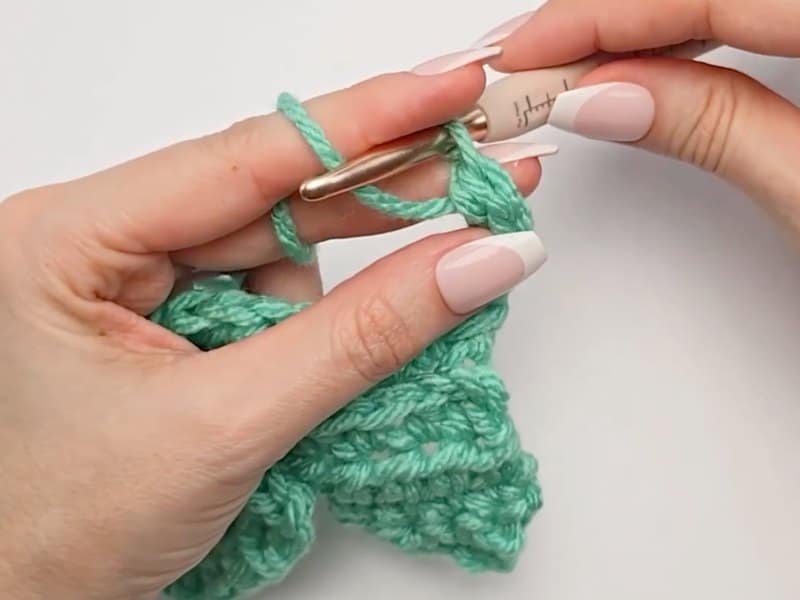
Then keep going with your row: work your first real double crochet into the 2nd stitch. The bar is on the left side of the stitch if you crochet right-handed and on the right side if you’re left-handed. Finding it feels clunky for an hour and effortless after that, so mark it with a stitch marker at first.
Watch it on YouTube: I show every stacked start up close, step by step, in my Crochet Stacked Stitches video.
Stacked Single Crochet for Half Double Rows
Starting a row of half double crochet? Stack just 2: single crochet into the first stitch, then single crochet into the side bar. That’s a stacked single crochet (stsc), about as tall as a half double. I have a full stacked single crochet tutorial with decrease options too.
Stacked Treble for Taller Rows
For treble rows, stack 4. For double treble, stack 5. Same move every time, just more of it. See the stacked treble in the app.
Turning Chain vs Stacked Start: Which Should You Use?
| Turning chain | Stacked start | |
|---|---|---|
| Edge | Can gap or bump | Straight and solid |
| Looks like | A thin chain | A real stitch |
| Easy to miss at row end? | Yes | Less, if you mark it |
| In patterns | Most patterns | My patterns, and a swap for any row |
| Best for | Following a pattern exactly | Blankets, seams, and borders |
My honest take: learn the turning chain so you can read any pattern, then switch to stacked starts for anything with an edge people will see. Blanket sides, panels you’ll seam, and anything getting a border all look better with a solid edge stitch.
Common Turning Chain Mistakes (and Fixes)
- Your edges slant in and the piece gets narrower. You skipped the last stitch of the row. When the turning chain or stacked start counts as a stitch, your last stitch goes into the top of it. Put a stitch marker there.
- Your piece keeps getting wider. You worked into the first stitch right under a turning chain that counts. Skip it. The chain already took its place.
- There’s a gap or loose bump at the start of each row. That’s the turning chain. Try a chain 2 instead of a chain 3, or switch to a stacked start.
- Your stacked start is too short or too tall. Count your stacked single crochets: 2 for half double, 3 for double, 4 for treble.
- Your stack twists or looks lumpy. Make sure you go into the bar on the side of the stitch you just made, not back into the row below.
Practice Swatch: Both Starts Side by Side
Make one swatch and try both. You’ll see the difference at the edges right away.
- Chain 14.
- Row 1: double crochet in the 4th chain from your hook and in each chain across. (12 stitches)
- Rows 2 to 4: chain 3 (counts as dc) and turn. Double crochet in the 2nd stitch and in each stitch across, with the last one in the top of the chain 3. (12 stitches)
- Rows 5 to 8: turn, stacked double crochet (counts as dc). Double crochet in the 2nd stitch and in each stitch across, with the last one in the top of the stack. (12 stitches)
Count every row. Still 12? Now compare the edges of rows 2 to 4 with rows 5 to 8.
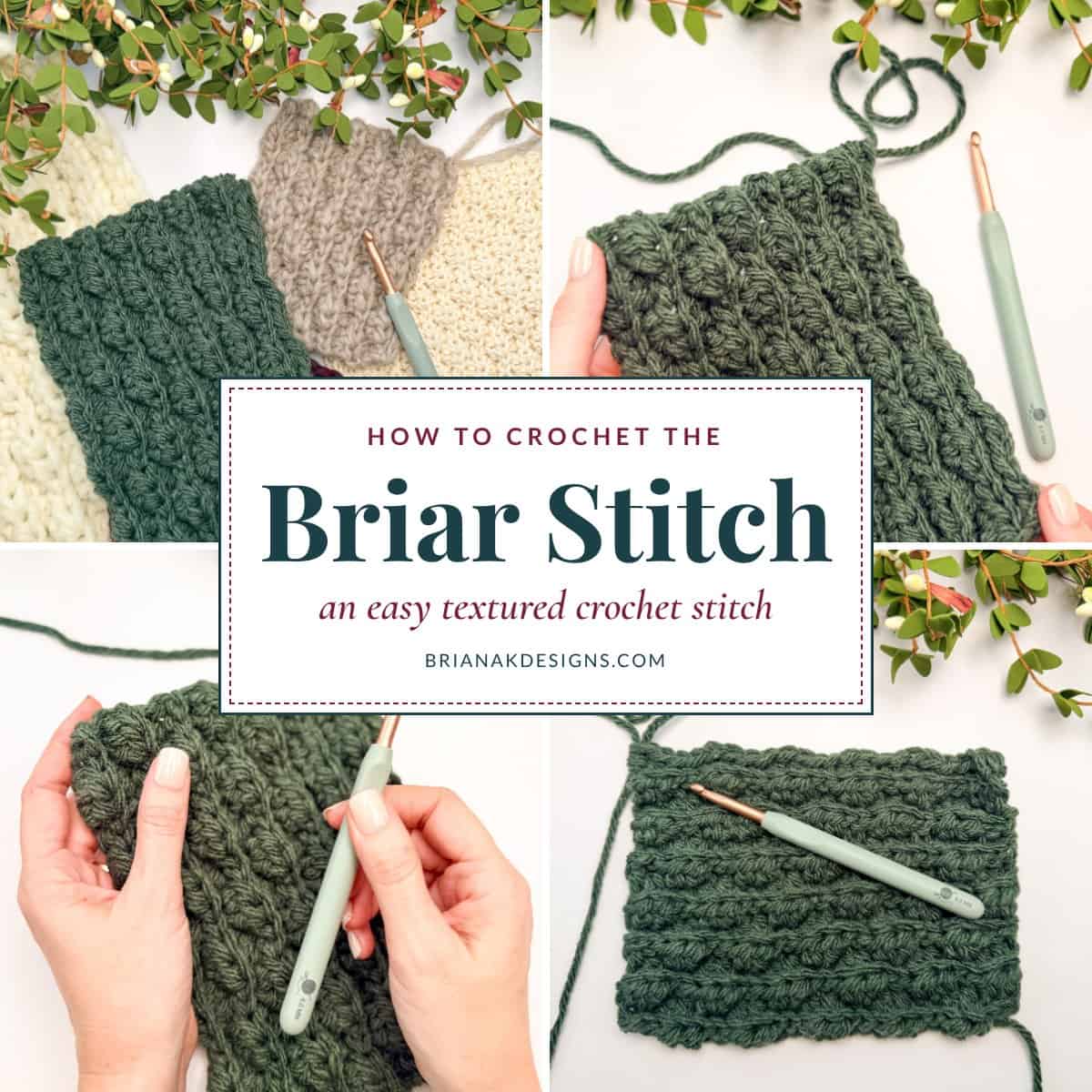
Try It: The Briar Stitch
My free Briar Stitch tutorial is worked in rows, so every row is a chance to practice a clean start. It makes the prettiest little bumpy texture.
Get the free tutorialTurning Chain FAQs
What is a turning chain in crochet?
It’s a short chain you make at the start of a row to bring your yarn up to the height of the stitches in that row. Patterns may shorten it to t-ch.
How many turning chains for single crochet, half double, and double crochet?
Chain 1 for single crochet, chain 2 for half double, chain 3 for double crochet and chain 4 for treble.
Does the turning chain count as a stitch?
For single crochet, no. For double crochet and treble, it usually does. For half double, it depends on the pattern. Always follow the note in your pattern.
Do you chain before or after you turn?
Either works, and you’ll see both in patterns. Many crocheters chain first and then turn so the chain stays tidy. With a stacked start, you just turn and start stacking.
What can I use instead of a turning chain?
A chainless stacked start. Stack single crochets at the edge: 2 for half double, 3 for double, 4 for treble. It gives a straighter, gap-free edge.
Does a stacked start count as a stitch?
Yes, it counts as the first stitch of the row, just like a turning chain that counts. Work your next stitch into the 2nd stitch, and work into the top of the stack on the next row.
Is a stacked double crochet the same as a chainless starting double crochet?
They do the same job: a real stitch at the edge with no chain. The chainless starting double crochet is worked a little differently. The stacked version is just single crochets stacked, which I find easier for beginners.
How do I do a stacked start left-handed?
The steps are the same. Just go into the bar on the right side of the stitch instead of the left. Open the stacked double crochet card in my app and flip the left-handed switch to see my video mirrored.
Keep Going: Your Next Lesson
Next up: front loop vs back loop. Working into just one loop of each stitch changes the texture of your fabric, and it’s how you make ribbing.
Sources: turning chain numbers follow my book Crochet for Beginners and the Lion Brand Yarn crochet glossary (turning chain). Stacked start steps follow my Stitch app stitch cards.
What should you make next?
Keep the hook movingReaders Are Loving
 Chain Stitch
 Hold the Hook
 Yarn Weight Chart
 Block Crochet