
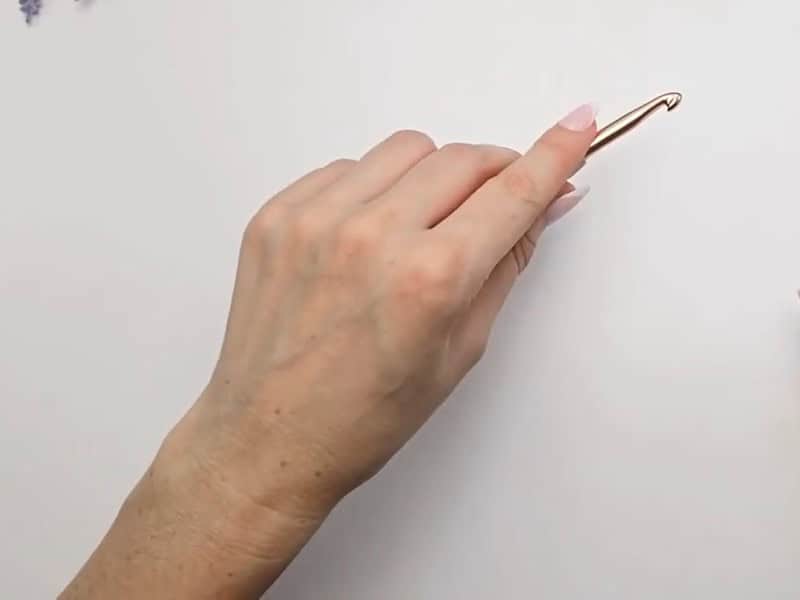
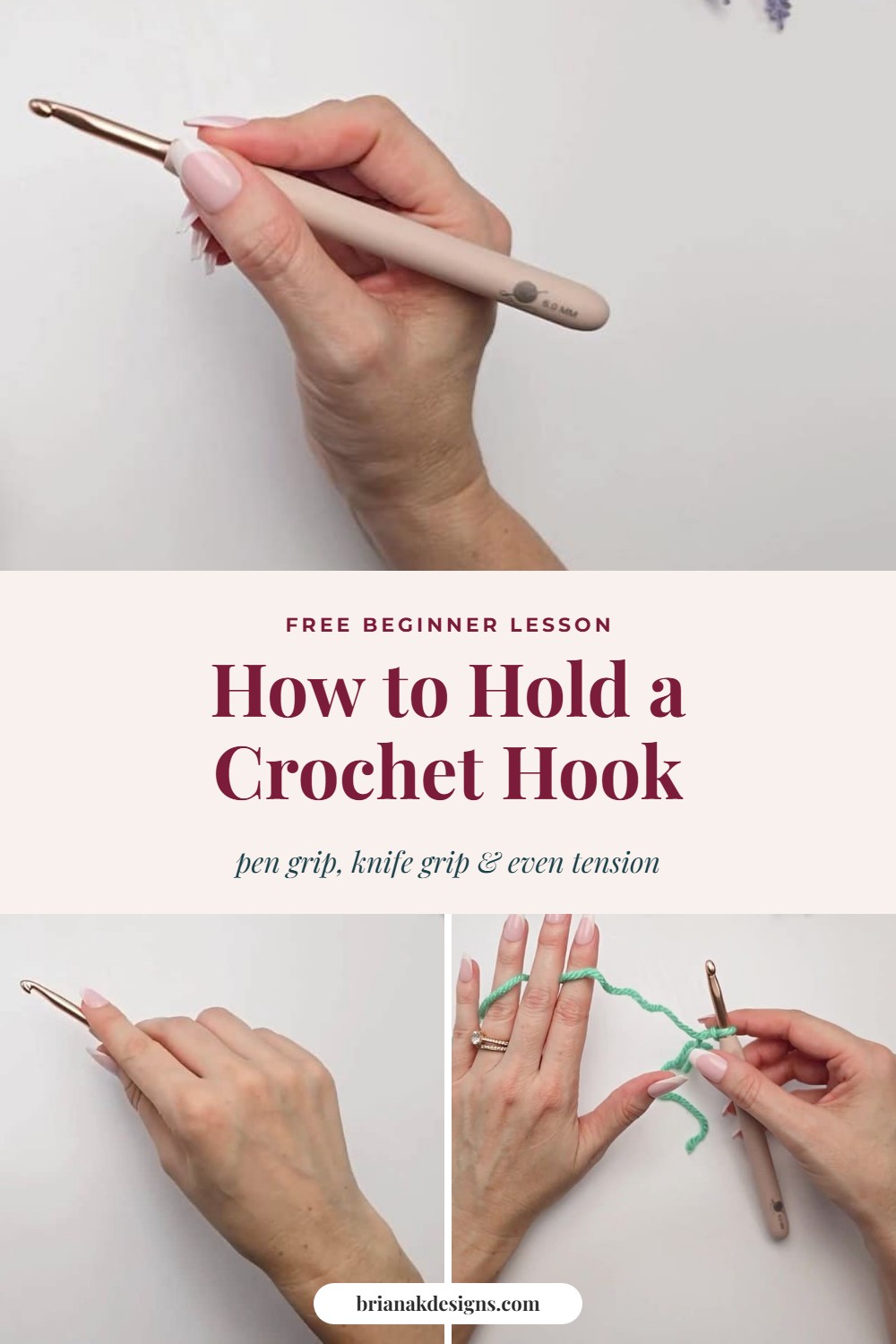
- Hold the hook in your dominant hand like a pen (between thumb and index finger) or like a butter knife (hand over the top).
- Turn the hook so it faces toward you, with your thumb on the flat thumb rest.
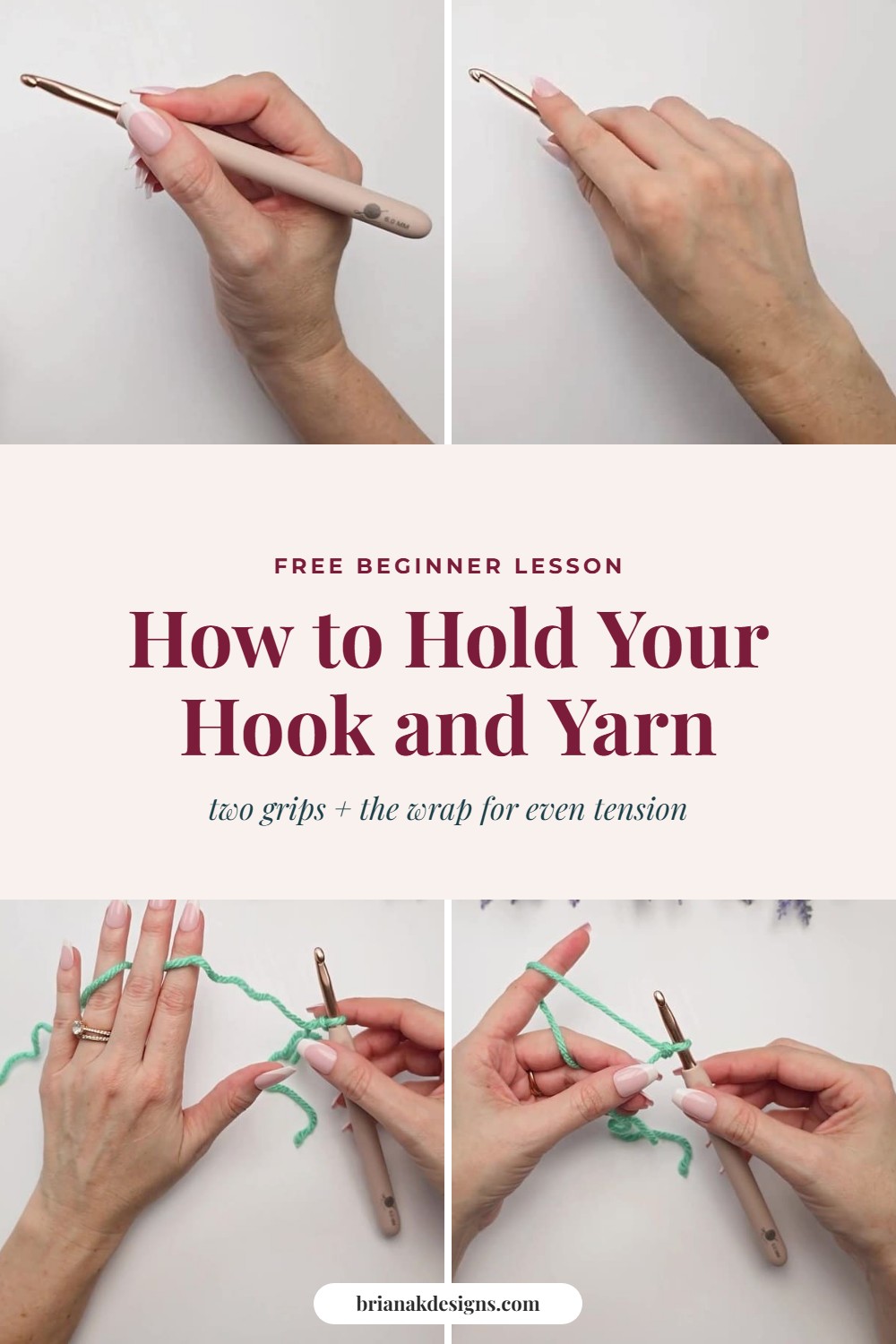
- In your other hand, wrap the yarn around your pinky, under your ring and middle fingers, and over your index finger.
- Pinch your work just under the hook with your thumb and middle finger.
- Lift your index finger to feed yarn to the hook. Too tight? Wrap less. Too loose? Wrap more.
Here’s the part of every crochet lesson where someone shows you a perfectly photographed hand holding a hook in a perfectly correct position, and you decide you’re doing it wrong. Let me save you the worry: the right way to hold a crochet hook is whatever way works for you. In this lesson, I’ll show you the two common grips, how to hold your yarn for even tension, and what to do when your hands feel weird (they will, for a little while).
What You Need
- A crochet hook. A 6 mm (J) hook is a great size to learn on. I recommend Crochet.com Dots hooks for beginners because the handle is comfy in either grip. The hook you see in my videos is from Heart Hook Home. Want to compare more? Here are my favorite crochet hooks. Not sure what the sizes mean? Check my crochet hook size chart.
- Smooth, light-colored yarn. I’m using Crochet.com Brava Bulky in mint, the yarn from this whole series. A smooth yarn slides through your fingers evenly, so it’s easier to feel your tension. New to yarn weights? Here’s my yarn weight chart.
Some links are affiliate links, which means I may earn a small commission at no extra cost to you.
Get to Know Your Hook
Before you pick up your hook, here are the parts you’ll hear me talk about:
- Head: the little hook on the end that catches the yarn.
- Throat: the groove right under the head, where the yarn sits.
- Shaft: the straight part your loops live on. Its width sets the size of your stitches.
- Thumb rest: the flat spot. Your thumb goes here in either grip.
- Handle: everything below the thumb rest.
How to Hold a Crochet Hook: 2 Common Grips
There are two main ways to hold a crochet hook, plus a few variations that don’t fit neatly in either camp. In both grips, the hook faces toward you, and your thumb sits on the thumb rest.
The Pen Hold (Pencil Grip)
Hold the hook the way you hold a pen or pencil, between your thumb and index finger, with the shaft resting on your middle finger. Most crocheters who learned from a teacher in the US or UK use this grip. It gives you fine control, which is lovely for small stitches and lighter yarn.
The Knife Hold
Hold the hook the way you’d hold a butter knife, wrapped in your hand with your thumb on top. Your grip is closer to a fist. Many crocheters find it more comfortable for long sessions or for thicker yarn, because the big muscles of your hand do the work.
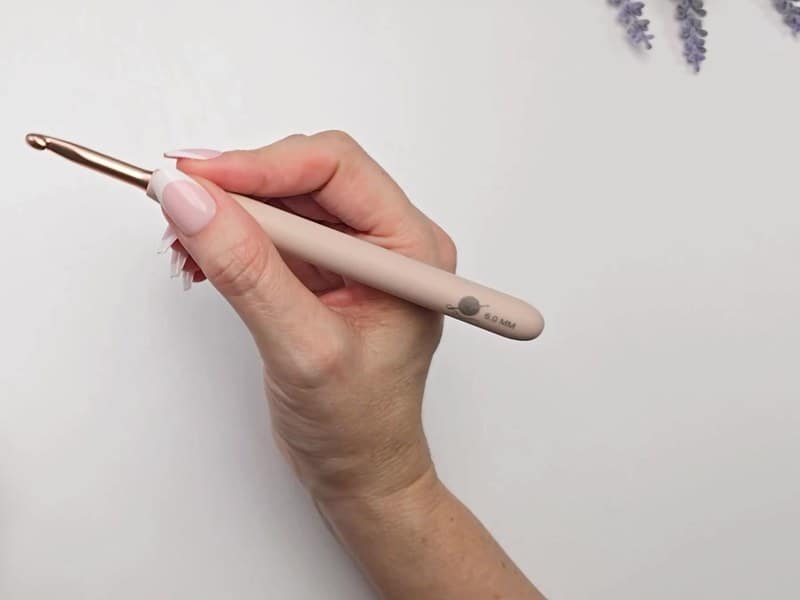
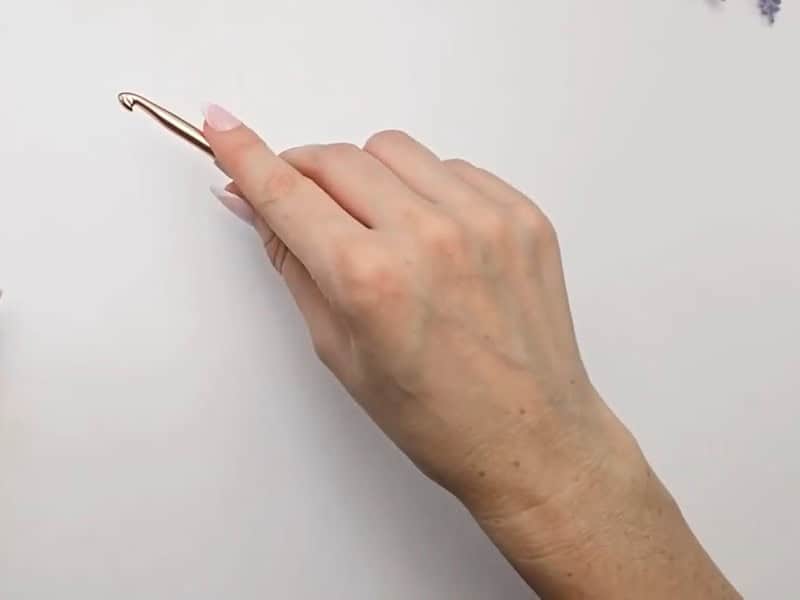
Try both. Genuinely try both, even if one feels obviously right the first time. Your hands will tell you which one they like. There’s no prize for picking the popular grip.
The variations. Some people pinch the hook between just their thumb and index finger with the rest of the fingers curled below. Some hold it almost like a paintbrush. If your grip doesn’t match any photo in any crochet book and your stitches still come out fine, your grip is correct. The hook does not care. The yarn does not care.
Which Grip Feels Right? Find Yours
Which grip feels right? Answer 3 quick questions
Tap one answer in each row to see which grip to try first.
How to Hold the Yarn for Even Tension
Your other hand has one job: deliver yarn to the hook with even tension. Tension is the resistance the yarn has as it moves through your fingers. Too loose and your stitches look sloppy. Too tight, and you can barely get your hook in. Here’s the classic wrap I use:
- Hold the working yarn (the end that goes to the ball) in your non-hook hand.
- Wrap it around your pinky finger.
- Weave it under your ring and middle fingers.
- Lay it over your index finger. This is your feeder finger.
- Pinch your work just under the hook with your thumb and middle finger.
- Lift your index finger to feed the hook more yarn. Lower it to slow the yarn down.
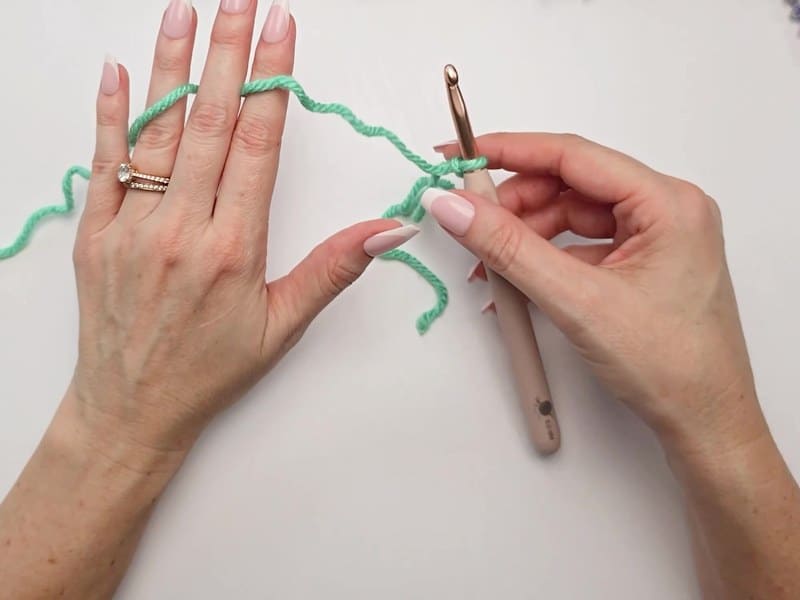
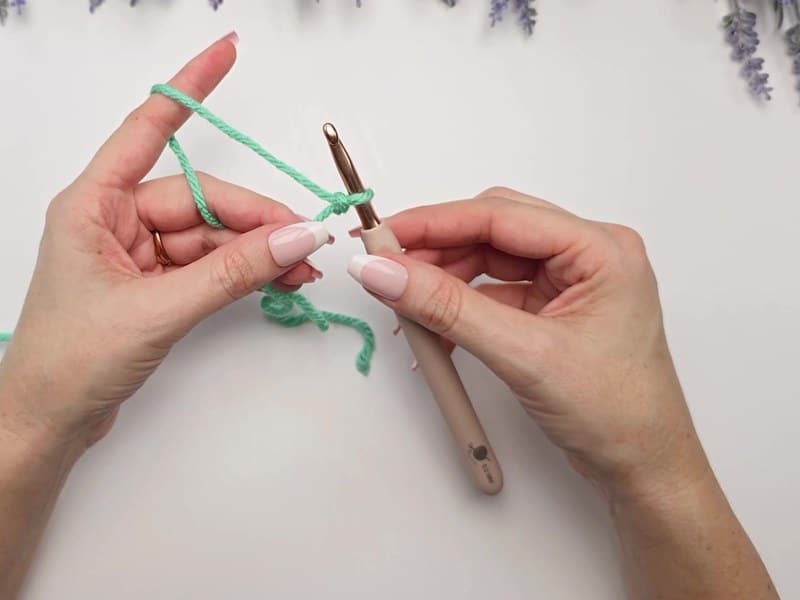
Watch me hold my hook both ways and wrap the yarn, up close.
That textbook wrap is one way to do it. Other crocheters wrap the yarn around their pinky and skip the weaving. Some wrap it twice for more grip. Some don’t wrap it at all and just hold it lightly between thumb and index finger. Try the classic wrap first because it gives you the most control. If it feels impossible, simplify.
- Stitches too tight? Wrap less. Take the yarn off your pinky, or skip the weave.
- Stitches too loose? Wrap more. Add a wrap around your pinky or your index finger.
- Yarn tangling? Keep the ball in a bowl or a bag beside you.
Briana’s Tip
Most yarn balls have a pull end tucked into the center. Pulling from the inside keeps the ball from rolling around the room. Either end works, but pick one and stay with it for the whole project so your tension stays the same.
“But My Hands Feel Weird”
Yes. They will. For the first hour or two, your hands will feel awkward, your fingers won’t know where to go, and you’ll wonder how anyone does this for fun. That’s normal, and it passes quickly. Most beginners find it fades by the end of their first swatch.
Awkward is normal. Pain is not. If you feel sharp pain in your wrist, sore knuckles, or numb fingers, stop and set the hook down. Shake out your hands, loosen your grip, or switch grips entirely. A hook with a bigger, softer handle helps a lot too. Crochet should never hurt.
Holding a Crochet Hook Left-Handed
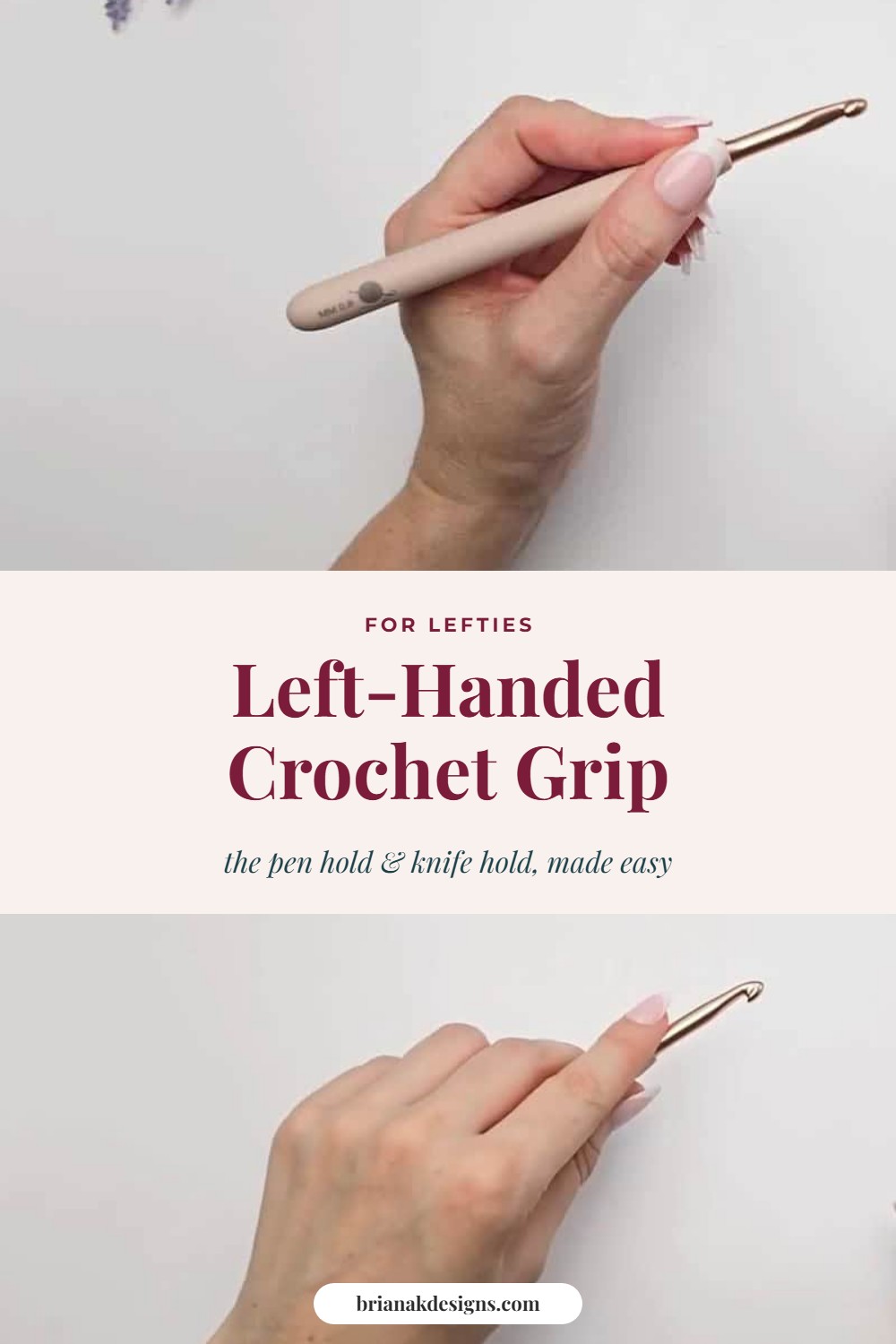
If you’re left-handed, almost every tutorial shows a right-handed grip. That’s a small inconvenience with an easy fix, and both of these work beautifully:
- Crochet right-handed anyway. Crochet is a two-handed craft where neither hand feels natural at first, so learning right-handed isn’t really harder. After the first hour, you can follow every pattern and tutorial as is.
- Crochet left-handed and flip the video. Hold the hook in your left hand and the yarn in your right. Every stitch page in my Briana K Stitch app has a Left-handed button that mirrors the video so my hands match yours.
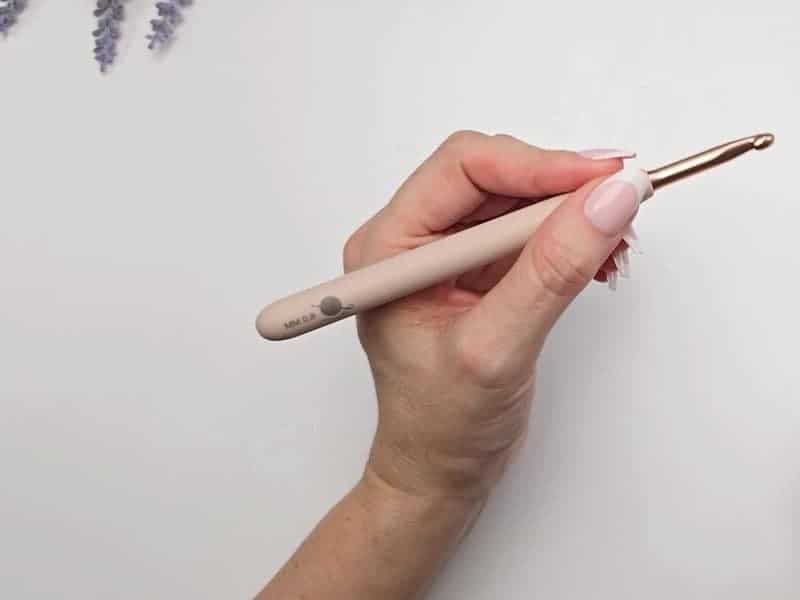
Practice a chain in the app (left-handed too)
Common Mistakes (and Fixes)
| Problem | Fix |
|---|---|
| Hook facing away from you | Turn the hook so the head faces toward you. Then it catches the yarn on the way back out instead of snagging your stitches. |
| White knuckles | You’re squeezing too hard. Relax your fingers until the hook just stays put. A tight grip makes tight stitches and sore hands. |
| Stitches too tight to get into | Wrap the yarn less and lift your index finger to give the hook more slack. |
| Loose, loopy stitches | Wrap the yarn one more time, or lower your index finger so the yarn moves slower. |
| Work spinning on the hook | Pinch the fabric right under the hook with your thumb and middle finger, and move that pinch up as you go. |
| Wrist hurts | Keep your wrist straight, not bent. Try the other grip, take breaks, and stretch your hands. |

Try It: The Even Moss Stitch Washcloth
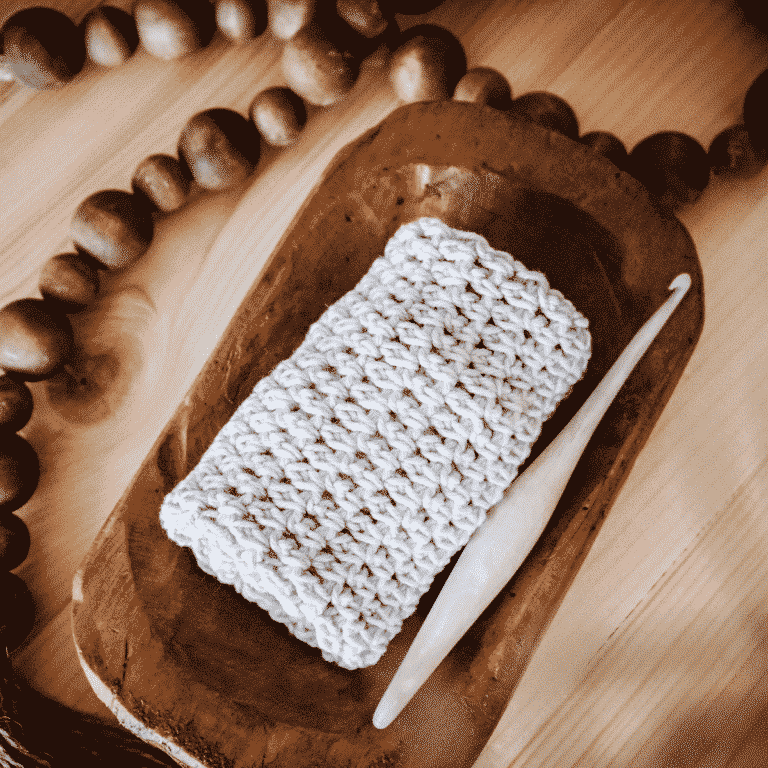
The best way to find your grip is to crochet a little every day. My free Even Moss Stitch washcloth is small, worked in simple rows, and perfect for settling into your tension.
Get the free patternHow to Hold a Crochet Hook FAQs
Is there a right way to hold a crochet hook?
No. The pen hold and the knife hold are the two most common, and both are correct. Any grip that keeps your wrist relaxed and makes stitches you’re happy with is the right one for you.
Is the pen hold or knife hold better?
Neither is better. The pen hold gives fine control for small stitches. The knife hold is relaxed and strong for long sessions and bulky yarn. Lots of crocheters switch between them.
Which hand holds the crochet hook?
Your dominant hand holds the hook and your other hand holds the yarn. Right-handed crocheters hook with the right hand. Lefties can hook with either hand.
How do I hold the yarn for good tension?
Wrap the working yarn around your pinky, under your ring and middle fingers, and over your index finger. Lift your index finger to feed the yarn. If your stitches are too tight, wrap less. Too loose, wrap more.
Do I need a crochet tension ring?
No. A tension ring is a little ring you wear on your finger to guide the yarn. It can help if wrapping the yarn hurts or you just can’t get it even, but most people get great tension with their fingers after some practice.
Why does my hand hurt when I crochet?
Usually you’re gripping too tight or bending your wrist. Loosen up, keep your wrist straight, try the other grip, and take breaks. A thicker, ergonomic handle helps. If pain keeps coming back, stop and check with a doctor.
How long does it take for holding the hook to feel normal?
For most beginners, an hour or two. By the end of your first swatch, your hands will start to know the moves, and by your first project you won’t think about it.
Next up is the slip knot, the very first step of almost every project. Learn how to make a slip knot.
Learn to Crochet: free beginner series
Work through the lessons in order, or jump to the one you need.
Sources: the grips, the yarn wrap, and the left-handed tips follow my book Crochet for Beginners (Lesson 3, Holding Your Hook and Yarn) and my Stitch app cards.
Which stitch is your soulmate?
Keep the hook movingReaders Are Loving
 Tunisian Simple
 Wheat Stitch Tutorial
 Stacked Single Stitch
 Extended HDC Stitch