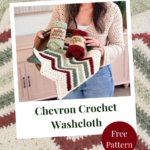
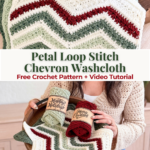
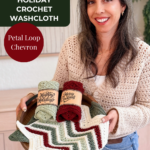
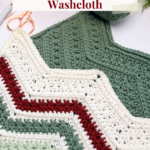
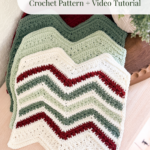
I made the first of these crochet chevron washcloths on a night I absolutely did not have time to start a new project. I had one skein of Herrschners Cottage Cotton (in the Merlot colorway) out and wanted to test whether the Petal Loop Stitch would hold a chevron shape. Two hours later, I had a stunning red washcloth sitting on my kitchen counter that I have used almost every day since (even though I think it’s still too pretty to dirty).
Disclosure: This post contains affiliate links. Please read my disclosure for more info.
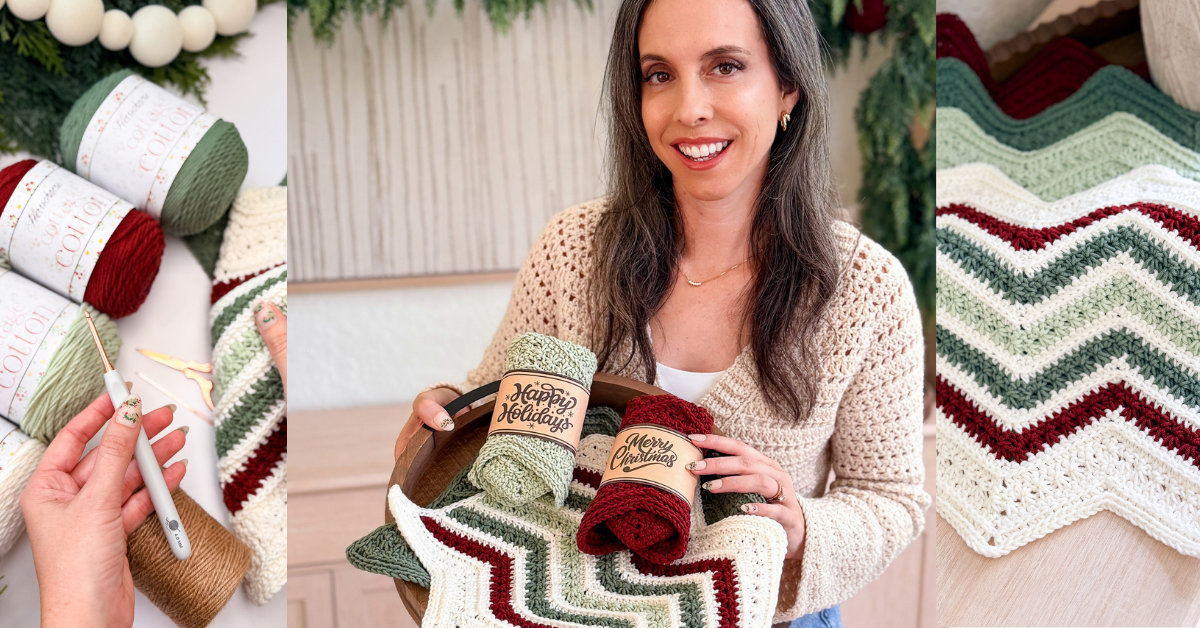
That is the honest origin of this one. It started as a swatch to answer a question, and it turned into a pattern because the texture is so much prettier than a plain single crochet chevron. The petals catch the light along each ripple, and the peaks stay crisp rather than going soft and mushy, the way waves sometimes do.
I have been designing crochet patterns for over a decade, and washcloths are still where I first test almost every new idea. They are small, they are fast, and if a stitch is going to misbehave, it shows up in twelve inches. This one behaved beautifully, so it earned a spot in my Petal Loop Holiday Crochet Pattern collection alongside the matching blanket, stocking, and ornament.
Before You Hook: Chevron Crochet Washcloth Pattern Details
🧶 Yarn Used: Herrschners Cottage Cotton (60% Cotton, 40% Acrylic, 207yds/100g)
⚖️ Yarn Weight: Worsted, #4
🧵 Featured Stitch: Petal Loop Stitch
🪝 Hook Size: US G (4.0mm) Crochet Hook, or hook to obtain gauge
📏 Sizes: One size, about 12 inches by 12.5″
🩷🩷🩷🤍 Difficulty level: Intermediate
🕐 Approx Crochet Time: About 2 to 3 hours, depending on your pace and how often you change colors
🏷️ Project Type: A textured crochet chevron washcloth worked flat in rows, great for kitchen, bath, and handmade gifting
Save for Later • Get a Summary • Pick Up Where You Left Off
Why You’ll Love This Chevron Petal Loop Washcloth
- The Petal Loop Stitch gives it a raised, textured ripple that a plain chevron just cannot match.
- It is small and quick, so it is the perfect place to test a color palette before you commit to a blanket.
- You carry your colors up the side instead of cutting and rejoining, which means far fewer ends to weave in.
- Worked in a cotton blend, it softens with every wash and only gets better with use.
- The Merlot, Silver Sage, and Hilltop color story makes a stack of these an easy handmade Christmas gift.
- Pairs perfectly with the Petal Loop Nesting Trays and Petal Loop Stitch Trivet for a stunning gift.
Chevron Petal Loop Washcloth Pattern Supplies
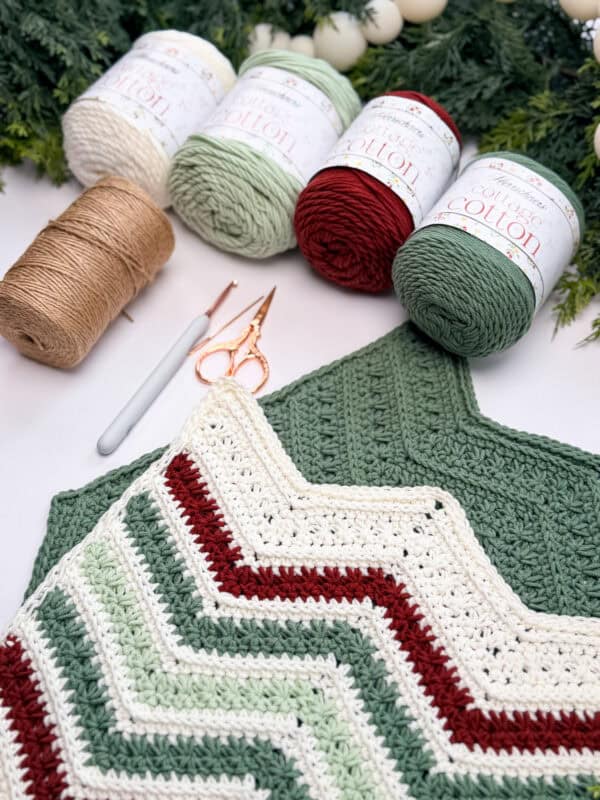
Yarn
Herrschners Cottage Cotton
60% Cotton, 40% Acrylic, 207yds/100g
Yarn Quantities
150 total yds per washcloth
Crochet Hook
Size US G (4.0mm) Crochet Hook or hook to obtain gauge.
Notions
Scissors
Yarn Needle
Removable Stitch Marker
Be sure to check out the full pattern tips below
Best Yarn for a Crochet Washcloth
The classic advice is 100% cotton, and that is a great default because cotton is absorbent, durable, and holds up to constant washing. But I want to make a brief case for the cotton-acrylic blend I used here. A blend like Cottage Cotton keeps most of cotton’s absorbency while the acrylic adds structure, which is genuinely helpful for a chevron. The little bit of body in the yarn keeps those peaks from going limp after the first wash.
What you want to avoid is 100% acrylic on its own. It simply does not absorb water well, so it makes a poor washcloth no matter how pretty the stitch. Whether you reach for pure cotton or a blend, worsted weight is the sweet spot for a cloth this size. If you love a textured, everyday cloth, my textured Moss Stitch Washcloth is another good one to keep in the rotation.
Yarn Substitutions
Prefer 100% cotton, or want to use what is in your stash? Any of these worsted-weight cottons work well.
Crochet.com Dishie: 100% Cotton, 190yds/100g
Village Yarn Craft Cotton: 100% Cotton, 115yds/71g
Premier Home Cotton: 85% Recycled Cotton, 15% Polyester, 131yds/75g
Lily Sugar ‘n Cream: 100% Cotton, 120yds/71g
Remember always to check the gauge and drape when substituting yarns.
Skill Level
This one is intermediate. If you are comfortable with single crochet, half double crochet, and working from a repeat, you have everything you need. The Petal Loop Stitch looks fancy, but it is really a rhythm, and once you get a few rows in, your hands take over.
Sizing & Finished Measurements
The washcloth works up to about 12 inches wide by 12.5 inches long, which is a generous, useful size for both kitchen and bath. It comes in this one size and is worked flat in rows.
Abbreviations
2tog – 2 together (decrease)
ch – chain
hdc – half double crochet
RS/WS – Right Side/Wrong Side
sc – single crochet
sl st – slip stitch
st(s) – stitch(es)
Gauge
15 sts and 12 rows = 4″ by 4″ in the stitch pattern repeat. Not critical for this pattern.
Tips
How to Crochet A Gauge Swatch
- Working a gauge swatch will let you know if you will have the correct sizing for this pattern. It will also help you practice the stitches used in this project and improve your stitch work for a flawless look.
- Are you struggling to match the gauge? Check out the blog post on What is Crochet Gauge and How To Fix It
Special Stitches Used in This Pattern
Stsc: stacked single crochet: Insert your hook into the first stitch, yarn over, and pull up a loop. Yarn over and pull through both loops on the hook. (This will now look similar to a single crochet stitch, but we are not done yet.) Insert your hook into the vertical bar below, make a stitch, yarn over, and pull up a loop. Yarn over and pull through both loops on the hook.
Third Loop: see the Petal Loop Stitch video tutorial.
3-Loop-Petal: Insert the hook into the loop on the back of the previously worked stitch (or petal) and pull up a loop. Pull up one loop in each of the next two stitches of the previous row, for a total of four loops on the hook. Yarn over and draw through all four loops to complete the stitch.
Clean Sc: Insert your hook into the left bar of the sc stitch, then insert into the next row edge space. Yarn over and pull up a loop, then pull through the first loop on the hook. Yarn over and pull through the remaining two loops on the hook.
The Petal Loop Stitch
The Petal Loop Stitch is the whole reason this washcloth looks the way it does. Instead of flat rows of single crochet, you work into loops on the back of the previous stitches to create little raised petals that sit up off the fabric. Stacked into a chevron, those petals ripple along each wave, giving the cloth an almost woven, dimensional look.
If the stitch is new to you, watch my Petal Loop Stitch video tutorial before you cast on. Seeing the hook go into that back loop once or twice makes the written instructions click instantly, and it is the fastest way to get comfortable with the texture. I always recommend learning a signature stitch straight from the source so you are working it the way it was designed.

Printable Version
This pattern is free to read here on the blog. The ad-free printable PDF is available in the Briana K Designs shop on Etsy and Ravelry.
brianakdesigns.com
Important Pattern Notes
How the Chevron Petal Loop Washcloth is Made
Here is its shape before you dive into the written pattern below. You start with a foundation chain that sets the width and establishes the chevron repeat, then work the Petal Loop Stitch in rows. Increases at the peaks and decreases at the valleys build the waves, and keeping those lined up row after row gives you a crisp, consistent chevron rather than a wobbly one.
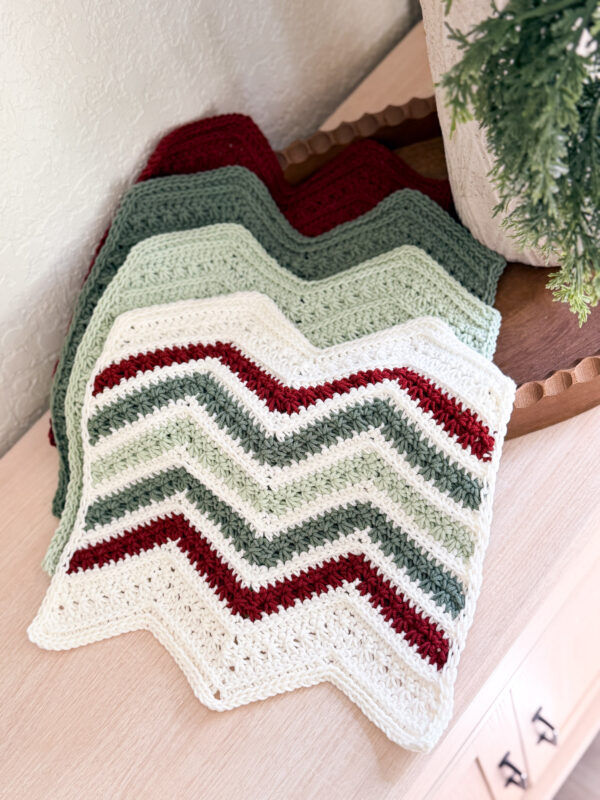
Color changes happen at the turn, and this is where the design gets fun. You swap colors on the last stitch of a row so the new color is ready to go, then carry the unused color up the side of the work rather than cutting it. That single habit saves you a shocking number of woven ends on a striped piece. Once the body is done, a clean single-crochet edge and a simple border pull the whole thing into a square. If you want that edge to look tidy, my clean straight edge tutorial shows exactly how I finish mine.
This washcloth is a great practice project before you start a Petal Loop Chevron Blanket.
Subscribe, Like & Watch on YouTube
Crochet Petal Loop Chevron Washcloth Video Tutorial
Relax & Crochet with NO Ads
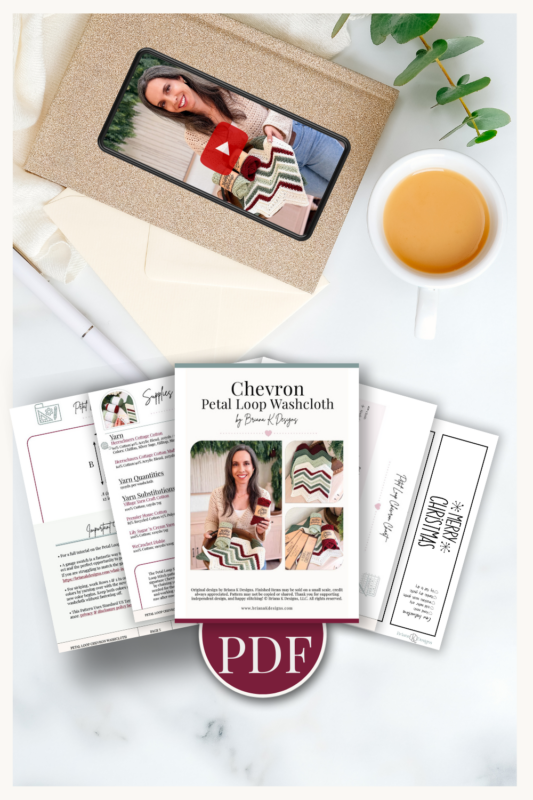
Upgrade to the Printable PDF
Beautifully formatted to print and take with you anywhere. The paid pattern includes:
Add your email in the box below to unlock this pattern to view on the blog for free. I’m thrilled to share this amazing crochet pattern with you! Please don’t copy, paste, or distribute this pattern. Prefer an ad-free experience? Purchase a digital PDF file for a small fee from one of my online stores. I appreciate your support and readership. You are why I can keep doing what I love and sharing it with others. Thank you from the bottom of my heart.
Chevron Petal Loop Crochet Washcloth Pattern
Row 5: Stsc2tog, *hdc 12, 3 hdc in next, hdc 12, skip 2 sts; repeat from * until 2 sts remain (omitting last skip 2 sts), hdc2tog, turn.
Row 6: Ch 1, third loop sc2tog, *third loop sc 12, third loop sc 3 in next, third loop sc 12, skip 2 sts; repeat from * until 2 sts remain (omitting last skip 2 sts), third loop sc2tog, turn.
Repeats: Repeat Rows 3-6 until there are 30 rows in total. Do not fasten off; go to Edging.
A Note on Color
The Petal Loop Stitch works in 4-row repeats, but your color changes do not have to follow those repeats. Work the whole thing in one color for a clean, textured look, alternate two colors evenly, do wide bands, narrow stripes, or go scrappy with leftover yarn. Change colors every two rows, every four, or at random. You can carry colors up the side when you are only skipping a row or two, so you are not cutting and weaving in endless ends.
Want to follow along with the striped washcloth as shown? Here are the rows where you would change color:
- Rows 1 to 6: White
- Rows 7 to 8: Red
- Rows 9 to 10: White
- Rows 11 to 12: Dark Green
- Rows 13 to 14: White
- Rows 15 to 16: Light Green
- Rows 17 to 18: White
- Rows 19 to 20: Dark Green
- Rows 21 to 22: White
- Rows 23 to 24: Red
- Rows 25 to 30: White
Edging
For a detailed look at this simple edge stitch, watch the clean, straight-edge tutorial.
Row 1: With the RS facing, ch 1 and work along the long edge, sc. (Place a stitch marker in this st to mark the first st of the round.) *Insert your hook into the left bar of the sc just made, then insert into the next space on the edge of the washcloth. Yarn over, then pull a loop through the washcloth fabric and through one loop on the hook. Yarn over and pull through two loops on the hook. Repeat from * all the way around the edge of the washcloth, placing 2 sts on each corner, working 1 st per sc row and 2 sts per petal st row if needed.
Join The Kindest Community
Join our vibrant community of crafters on Facebook today. Whether you enjoy crafting with others or simply have burning questions, we’ve got you covered – join us now!
Finishing
Join to the first stitch of your clean edging and fasten off, leaving a tail a few inches long. With your tapestry needle, weave in all ends along the back of the washcloth, following the direction of your stitches so they disappear into the fabric. Weave each tail in one direction for about an inch, then double back in the opposite direction to lock it in place. Since a washcloth gets wet, wrung, and washed constantly, this little back-and-forth is what keeps your ends from working loose. Snip close but not flush.
Give your washcloth a quick steam or a light press to even out the stitches and square up the edges, then it is ready to put to work. Cotton softens beautifully with use, so it will only get better the more you wash it. To care for it, toss it in the machine on a normal cycle and tumble dry, skipping the fabric softener so it stays absorbent.
If you have some leftover yarn, whip up a Petal Loop Ornament!
How to Stripe Without Weaving Endless Ends
Stripes are the best part of this washcloth, and also the part people dread, because every color change sounds like another set of ends to bury. The trick is not to cut your yarn every time. When you are only skipping a row or two before a color comes back, leave it attached and carry it loosely up the side of the work as you go.
Because the border wraps the whole cloth at the end, those carried strands get tucked neatly under the edging and disappear. You end up weaving in a handful of ends instead of two dozen. If you want a totally different look, work the whole thing in one color for a clean, tonal texture, or go scrappy with cotton leftovers.
The cloth is small enough to be the perfect palette playground before you commit those colors to something like my Wheat Stitch Ripple Blanket. You can also try my Knot Join!
Chevron Petal Loop Washcloth FAQs
What yarn is best for a crochet washcloth?
Cotton is the standard because it is absorbent and withstands repeated washing, and worsted-weight is the most common choice for a cloth this size. Pure cotton like Lily Sugar ‘n Cream or Crochet.com Dishie works wonderfully. I used a cotton-and-acrylic blend for this one because the acrylic adds a little structure that keeps the chevron peaks crisp, while the cotton still handles the absorption. The one thing to skip is 100% acrylic on its own, since water tends to roll off it rather than soak in.
How much yarn does one washcloth use?
Plan on about 150 yards for one washcloth in worsted-weight cotton. That makes this a great way to use up partial skeins and odd balls from your stash. If you are striping with several colors, you will only use a small amount of each, so a set of coordinating leftovers can easily make a whole cloth.
What is the difference between a washcloth and a dishcloth?
Honestly, not much beyond what you wash with it. The same crocheted cloth can scrub dishes, wipe counters, or wash your face. Cotton and cotton blends work for all of those jobs. So if you searched for a chevron dishcloth and landed here, you are in the right place; this pattern does both.
How big should a crochet washcloth be?
Most crocheters land somewhere between 8 and 12 inches square, and it really comes down to personal preference. The sample here finishes around 12 inches by 12.5 inches, which is a roomy, useful size. Because it is worked flat, you can make it smaller or larger just by adjusting your starting chain and the number of rows.
Is there a matching blanket?
Yes. The Petal Loop chevron looks gorgeous scaled up as a throw, and I designed a coordinating blanket in the same Christmas in July collection so you can make the set. It uses the same signature stitch and the same striping approach, just sized up for the couch.
Why won’t my chevron lie flat or keep its points?
A wavy or lopsided chevron almost always comes down to the increases and decreases drifting out of alignment. Each peak needs the same number of added stitches, and each valley the same number taken away, row after row. If your points start wandering, count back to your last clean row and check that your peaks and valleys align directly above those below. A quick steam or light press at the end also helps everything square up.
Can I use 100% cotton instead of the blend?
Yes, and it will make a lovely, absorbent cloth. Village Yarn Craft Cotton, Premier Home Cotton, Lily Sugar ‘n Cream, and Crochet.com Dishie are all great pure cotton substitutes. Just know that pure cotton has a little less body than the blend, so your peaks may sit slightly softer.
Can I sell washcloths I make from this pattern?
Yes. You are welcome to sell finished items made from this pattern on a small scale, and a credit to Briana K Designs is always appreciated. You may not copy, share, or redistribute the pattern itself, but the washcloths you make with it are yours to sell.
Whether you make one or a whole coordinating stack, this little washcloth is the kind of quick, textured make that turns a skein of cotton into something you actually reach for every day. Grab your favorite colors, pour a warm drink, and cast one on. I would love to see how yours turns out. The video tutorial is there if you want to stitch along with me.
More Crochet Patterns You’ll Love
If a textured make is your thing, these are worth a look next:
🥂 Cheers, and happy crocheting!
Hook down? Not so fast…
I’d Love to See Yours!
You made something beautiful. Here’s how to keep it, show it off, and inspire the next maker.

Who are you making for this year?
Keep the hook movingReaders Are Loving
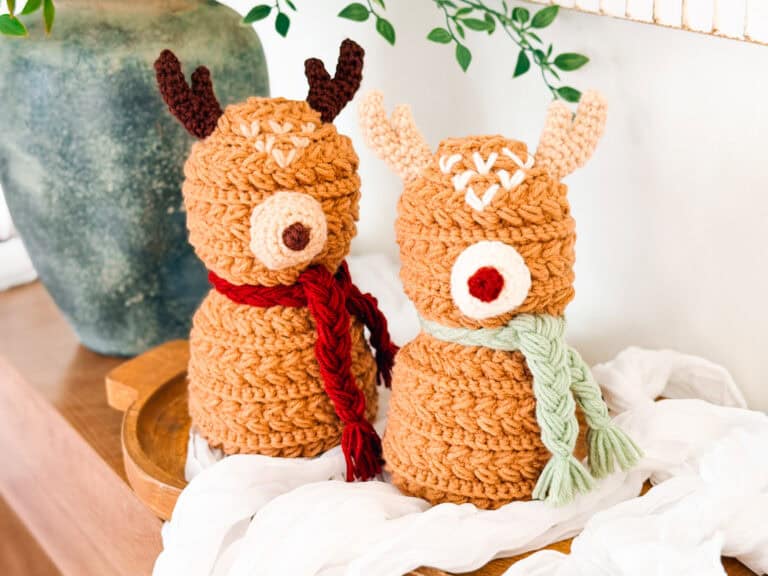
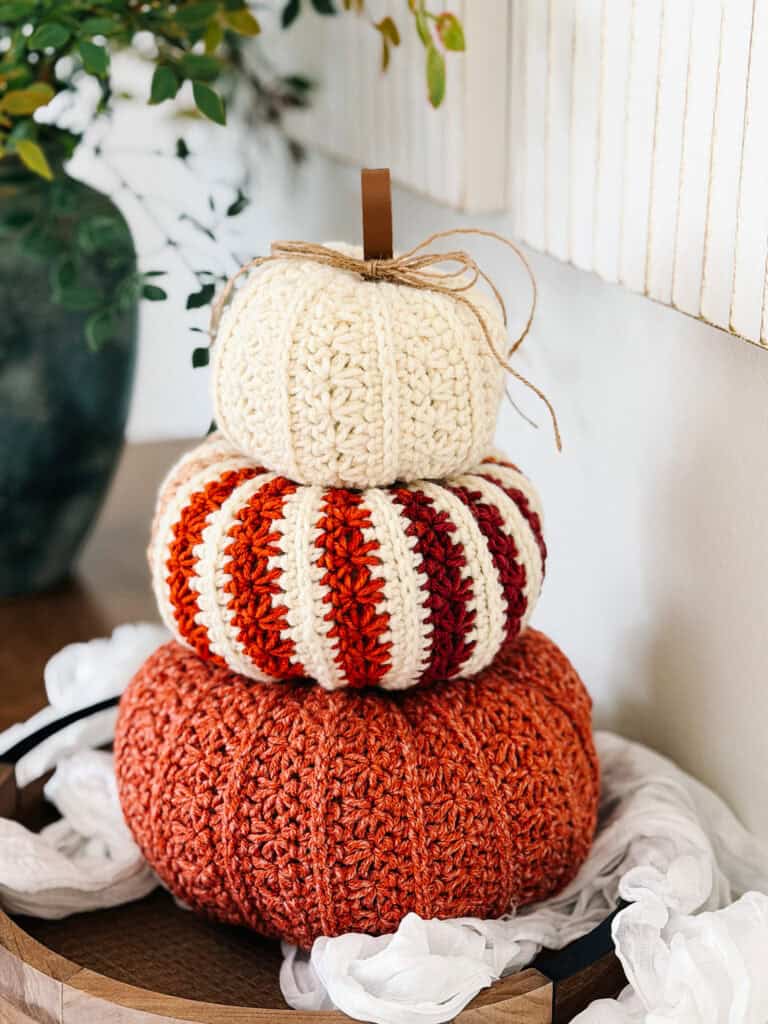 Petal Loop Pumpkins
 Wheat Stitch Trees
 Blossom Granny
 Wheat Stitch Wreath