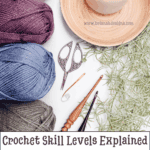
Crochet skill levels can feel confusing—especially when one designer’s “easy” feels like another designer’s “intermediate.” If you’ve ever started a pattern only to realize it was way outside your comfort zone (or surprisingly simple), you’re not alone. In this post, we’ll break down what crochet skill levels actually mean, from Beginner through Experienced, so you can confidently choose patterns that match your experience, build new skills at your own pace, and enjoy the process from first stitch to final weave-in.
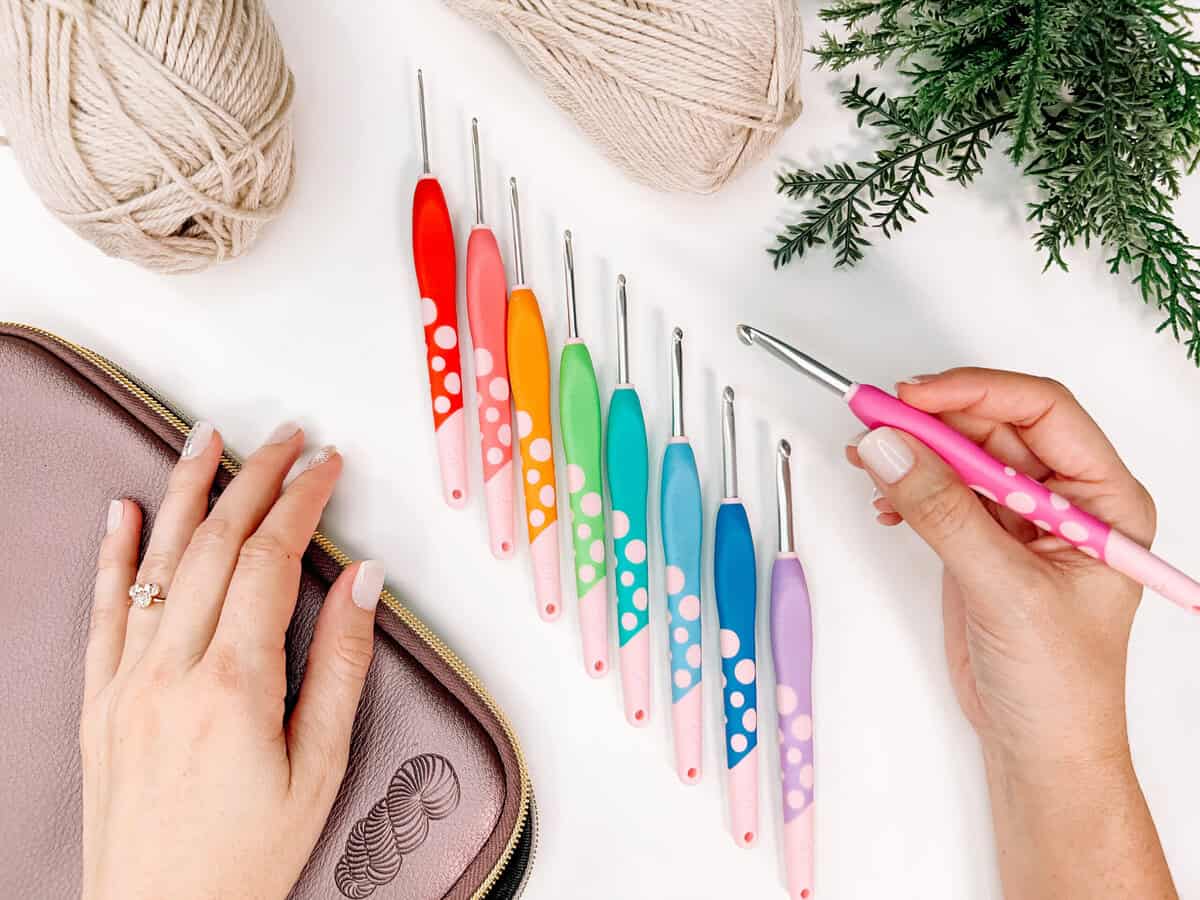
If you’ve ever thought, “Wait… this was labeled easy?”, this post is for you. Crochet skill levels aren’t always as clear-cut as we’d like, and what feels beginner-friendly to one crocheter might feel intimidating to another. Let’s clear things up. In this guide, I’m breaking down crochet difficulty levels—what skills they actually require, what you can expect from each one, and how to choose patterns that help you grow without the frustration.
Disclosure: This post contains affiliate links. Please read my disclosure for more info.
Why Knowing Crochet Skill Levels Matters
The 4 Crochet Skill Levels
Beginner: You’re learning the basics and building confidence one stitch at a time—and that’s exactly where the magic starts.
Easy: You’re comfortable with the fundamentals and ready to build on that foundation.
Intermediate: You’re stretching your skills, trying new techniques, and discovering just how much you can do.
Experienced: You’re confidently tackling detailed stitches and construction, turning challenges into creative wins.
Ad-Free Briana K Designs Pattern PDFs can be purchased on Etsy or Ravelry.
Add your email in the box below to unlock this pattern to view on the blog for free. I’m thrilled to share this amazing crochet pattern with you! Please don’t copy, paste, or distribute this pattern. Prefer an ad-free experience? Purchase a digital PDF file for a small fee from one of my online stores. I appreciate your support and readership. You are why I can keep doing what I love and sharing it with others. Thank you from the bottom of my heart.
Let’s Crochet with Confidence: A Friendly Guide to Crochet Skill Levels
Beginner (Basic)

What it means
This is where someone is just starting out. Projects are simple in structure and stitch variety: they help a crocheter build confidence with the tools and language of crochet. Patterns are straightforward, repetitive, and often teach essential skills.
Stitches & Techniques Included
✔ Fundamental stitches only — typically:
- Chain (ch)
- Slip stitch (sl st)
- Single crochet (sc)
- Half-double crochet (hdc)
- Double crochet (dc)
(Sometimes triple/treble, but only one at a time)
✔ Basic concepts:
- Yarn over and draw through
- Turning chains
- Stitch counting
- Reading simple abbreviations (ch, sc, dc, rep)
- Weaving in ends
(Note: These are essential building blocks before moving on)
Pattern Attributes
- Worked in straight rows (no shaping or minimal shaping)
- Little to no shaping or finishing techniques
- Stitch patterns are repetitive — the same stitch or stitch sequence repeated
- No chart reading required
- Construction is obvious and doesn’t require pattern interpretation skills
Typical Beginner Projects
- Dishcloths (Try the Moss Stitch Washcloth)
- Simple scarves
- Basic granny squares
- Coasters
- Basic blankets with one stitch type
Easy (Advanced Beginner)

What it means
“Easy” builds on the basics by combining stitches, adding a very simple pattern structure, perhaps some minimal shaping, and introducing new contexts, such as working in the round or color changes. Projects still feel accessible but require a bit more attention.
Stitches & Techniques Included
✔ Expanded stitch repertoire:
- Already knows Beginner stitches
- Adds:
- Trebles / triple crochets
- Basic stitch sequences (e.g., V-stitch, clustered stitches, simple textured stitches)
✔ Techniques introduced:
- Working in the round (round coasters, hats)
- Simple color changes (stripes)
- Basic shaping, like increases and decreases
- Joining yarn and finishing edges
✔ Pattern reading skills:
- Following short repeats and sequences
- Recognizing when to switch colors or stitch type
Pattern Attributes
- May include simple stitch patterns
- May include very basic shaping (e.g., slight waist shaping)
- Repetitive structures help the maker gain confidence
- Some opportunity to practice tension control and maintaining gauge
(Here’s a great guide for learning all about Gauge, Tension, and other helpful information: https://brianakdesigns.com/what-is-crochet-gauge-and-how-to-fix-it/)
Typical Easy Projects
- Basic hats or beanies (Like the Extended Half Double Crochet Beanie)
- Simple shawls or wraps (Try the Pretty in Pink Triangle Shawl)
- Easy textured scarves (The Wander Easy Scarf/Shawl pattern is fun!)
- Simple granny motifs with joins (Try the Hexagon Granny Ornament)
- Basic tote bags (The Easy Granny Rectangle Bag is perfect!)
Join The Kindest Community
Join our vibrant community of crafters on Facebook today. Whether you enjoy crafting with others or simply have burning questions, we’ve got you covered – join us now!
Intermediate

What it means
An intermediate project involves more complex stitch patterns, construction, and techniques that require a solid understanding of pattern language and sequence. Stitch combinations are more nuanced, and projects often require good tension control and pattern interpretation.
Stitches & Techniques Included
✔ More advanced stitches & combos:
- Shell stitch
- Cluster, puff, bobble stitches
(This is where my signature Wheat Stitch™ shines!) - Front loop only (FLO) / Back loop only (BLO) techniques
- Crossed stitches and texture work
✔ Techniques introduced:
- More involved shaping (e.g., waist shaping, armholes)
- Colorwork (stripes, simple planned color changes)
- Pattern repeats that change row to row
- Reading and working from simple charts
Pattern Attributes
- Often incorporates multiple stitch patterns within one piece
- May require joining motifs or pieces together
- More careful attention to finishing and blocking
Don’t know what Blocking is? I can help! https://brianakdesigns.com/all-about-blocking-your-crochet-projects-the-secret-to-a-professional-finish/
Typical Intermediate Projects
- Blankets with multiple textures or stitch patterns (The Totally Textured Blanket is a great project!)
- Sweaters and cardigans with shaping (Let’s make a Granny Square Cardigan!)
- Shawls with lace or texture (Try the Wheat Stitch™ Triangle Shawl!)
- Bags with multiple panels or textures (The Circle Leaf Market Bag is eco-friendly!)
- Color-blocked garments (The Robin Duster is color-block elegance!)
Experienced

What it means
Advanced projects use multiple techniques and complex combinations that require strong pattern-reading ability, confidence with diverse stitches, and often the ability to improvise or problem-solve. These projects have less repetition and more nuanced instructions than intermediate patterns.
Stitches & Techniques Included
✔ Complex stitches & combinations:
- Intricate lacework (multiple lace stitches in sequence)
- Entrelac/tapestry crochet
- Advanced textural blocks (hyperbolic shells, complex cables)
- Tunisian or hybrid stitches, where applicable
✔ Advanced techniques:
- Complex colorwork (fair isle/mosaic crochet)
Want to learn more about Mosaic Crochet? https://brianakdesigns.com/mosaic-crochet/
I have some great tips for other colorwork here: https://brianakdesigns.com/ways-to-colorwork-in-crochet/ - Intarsia or planned color charts
- Intricate shaping with precision stitch placement
- Working with multiple balls of yarn at once
✔ Pattern reading skills:
- Reading complex charts and symbols
- Combining written instructions with schematics and floats
- Mastering stitch counts across changes in pattern repeat structure
Pattern Attributes
- Requires close attention to detail
- Often higher demand for gauge precision
- Patterns may assume familiarity with special abbreviations
- Finished pieces might require advanced finishing and blocking
Typical Advanced Projects
- Lace shawls with complex charts (I love this Lace Sleeved Knit-Look Sweater!)
- Colorwork sweaters with multiple motifs (The Wheat Stitch™ Sweater is one of my favorites!)
- Mosaic blankets (Check out the Lotus Mosaic Blanket!)
- Complex amigurumi with shaping and embroidery
- Home decor with advanced joining techniques
Understanding crochet skill levels isn’t about putting limits on what you can make—it’s about giving yourself a clear, supportive path to grow. Whether you’re picking up a hook for the very first time or happily tackling intricate stitch patterns, every level represents progress, curiosity, and creativity. Beginner projects build confidence, easy patterns stretch your skills, intermediate designs invite you to explore texture and construction, and advanced projects celebrate everything you’ve learned along the way.
Wherever you are on your crochet journey, remember that there’s no rush and no “right” pace. Each stitch is practice, each project is a win, and every level has its own kind of magic. Keep going, keep experimenting, and, most of all, enjoy the joy of creating something with your own two hands.
Want to keep learning? Browse all my free crochet tutorials, from beginner basics to textured stitches, all in one place.
Cheers, and happy crocheting!
Hook down? Not so fast…
I’d Love to See Yours!
You made something beautiful. Here’s how to keep it, show it off, and inspire the next maker.
What should you make next?
Keep the hook movingReaders Are Loving
 How to Tie Slip Knot
 Twisted Fringe
 Split Single Crochet
 Willow Mesh Bag