
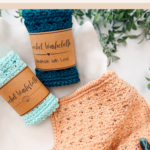
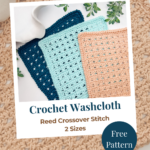
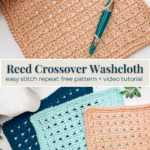
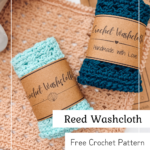
The honest truth about making crochet washcloths: I did not think I would have this much fun doing it. I grabbed some cotton (Crochet.com Dishie in Kenai, a deep teal) and told myself it would be a quick afternoon project. It was, but it was also one of those makes where you immediately want to start a second one the moment you finish weaving in the ends.
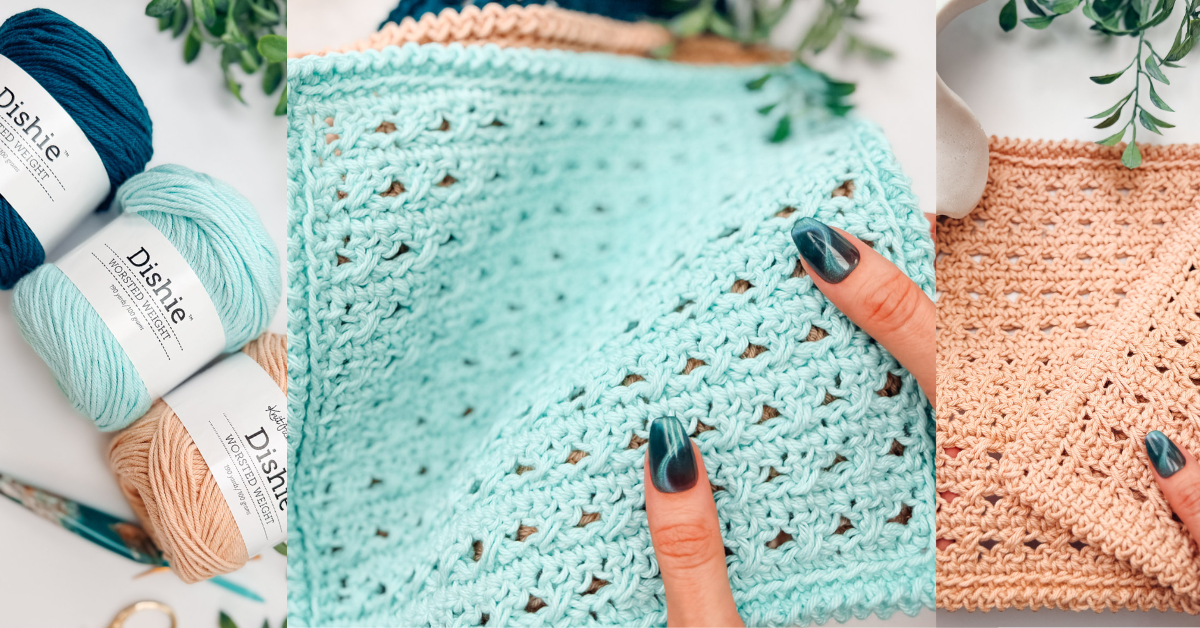
The Reed Crossover Stitch is what makes this one feel different from a standard washcloth. It has that woven, almost lacy look that makes people ask if it came from a boutique, but the actual stitch repeat is just two rows. I have been designing crochet patterns for over a decade, and this is one of those stitches I genuinely wish I had put into a pattern sooner.
This is a free crochet washcloth pattern with a full step-by-step video tutorial. It comes in two sizes, small and large, and works up quickly in any worsted-weight cotton. Whether you are making a batch for your own bathroom, building up craft fair stock, or putting together handmade gift sets, these are a genuinely useful make that people are actually happy to receive.
For more eco-friendly projects, try a Petal Loop Washcloth and the Wheat Stitch Hotpad.
Disclosure: This post contains affiliate links. Please read my disclosure for more info.
Before You Hook: Crochet Pattern Details
🧶 Yarn Used: Crochet.com Dishie (100% Cotton, 190yds/100g)
⚖️ Yarn Weight: worsted
🧵 Featured Stitch: Reed Crossover Stitch
🪝 Hook Size: US H (5.0mm) Crochet Hook, or hook to obtain gauge
📏 Sizes: Small 10.5″ x 10″ | Large 14″ x 13.5
🩷🩷🤍🤍 Difficulty level: Easy
🕐 Approx Crochet Time: 1-3 hours depending on size.
🏷️ Project Type: An easy crochet home accessory worked flat in a simple two-row repeat, great for gifts and craft fairs.
Save for Later • Get a Summary • Pick Up Where You Left Off
Why You’ll Love This Crochet Washcloth Pattern
There are a lot of washcloth patterns out there, and most of them look exactly the same. Here is why this one is worth your time.
- The stitch looks complicated, but it is not. The Reed Crossover Stitch produces that woven, lace-adjacent texture that makes people think you spent way longer than you did. The actual repeat is two rows. That is it.
- Two sizes with real yardage ranges. The small uses about 100 yards and works perfectly as a face cloth. The large uses about 200 yards and is a full-size washcloth. Both sizes are worth making so you can gift them as a set.
- Cotton yarn that behaves. Crochet.com Dishie is specifically designed for kitchen and bath use, and it shows. It is smooth to work with, soft on the skin, and gets better with every wash.
- The zigzag border finishes the whole thing. That slip stitch and chain border at the end takes maybe ten minutes and makes the washcloth look intentional rather than homemade.
- A video tutorial is included. Every step of this pattern is covered in the tutorial at https://youtu.be/jwxGCRdm-8s so you are never left guessing.
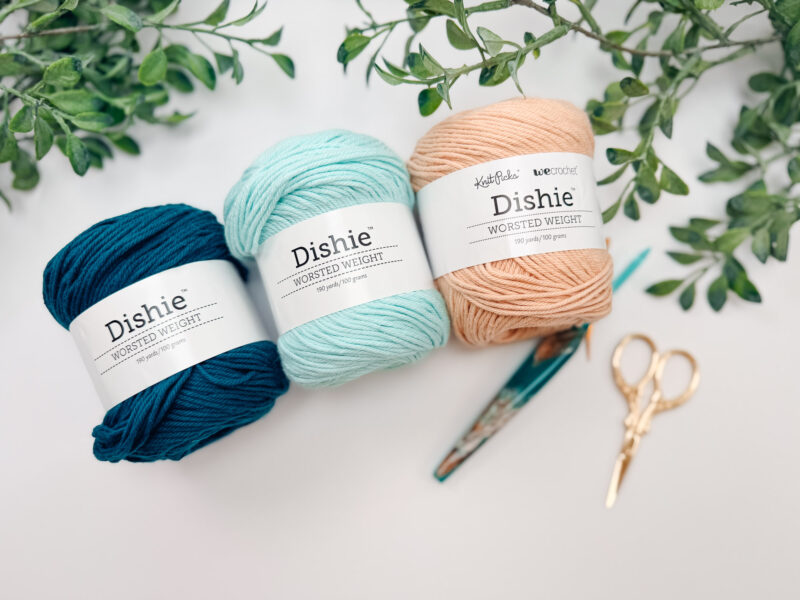
Reed Crossover Crochet Washcloth Supplies
Yarn
Village Yarn Craft Cotton
100% Cotton, 190yds/100g
Yarn Quantities
Small: 100 yds
Large: 200 yds
Crochet Hook
Size US H (5.0mm) Crochet Hook or hook to obtain gauge.
Notions
Scissors
Yarn Needle
Removable Stitch Marker
Be sure to check out the full pattern tips below
Yarn Substitutions
Herrschners Cottage Cotton — 60% Cotton/40% Acrylic, 207yds/100g
Premier Home Cotton – 85% Recycled Cotton/15% Polyester; 131yds/75g
Lily Sugar ’n Cream – 100% Cotton; 120yds/71g
Village Yarn Craft Cotton – 100% Cotton; 115yds/71g
Remember always to check the gauge and drape when substituting yarns.
Choosing the Best Yarn for Crochet Washcloths
Cotton is the right call for washcloths, and the reason comes down to absorbency and durability. Acrylic yarn repels moisture rather than absorbing it, which makes it a poor choice for something you plan to actually use on your face or in the kitchen. Cotton fibers are naturally absorbent and get softer with repeated washing, which is exactly what you want in a cloth that lives near the sink.
Worsted weight is the sweet spot for this washcloth. It gives the fabric enough structure that the stitch definition shows up clearly, and the finished cloth has a satisfying weight and thickness that holds up well to use. Lighter weights like DK, sport, or fingering will work, but you’ll need to adjust your hook size and expect a thinner, more delicate fabric.
If you have acrylic-heavy yarn in your stash and want to use it, a cotton blend like Herrschners Cottage Cotton (60% cotton, 40% acrylic) is a reasonable middle ground. The cotton content provides absorbency, and the acrylic adds softness, making the yarn easier to work with straight off the skein. Just skip the fabric softener when washing these, since it coats the fibers and reduces their ability to absorb water over time.
A quick note on color: dark colors and highly saturated yarns can bleed a little on the first few washes, especially with 100% cotton. If you are making these as gifts, wash them once before wrapping so the recipient does not end up with teal water in their sink the first time they use it.
Skill Level
The Reed Crossover Stitch sounds more technical than it is, and once you get through the first two rows, the repeat clicks quickly. If you are comfortable with single crochet and basic double crochet, you have everything you need. The written instructions and video walk through the stitch clearly, including the border.
Sizing & Finished Measurements
The Reed Crossover Stitch Washcloth comes in two sizes. All measurements include the border.
- Small: 10.5 inches wide by 10 inches long
- Large: 14 inches wide by 13.5 inches long
The small makes a great face cloth or baby bath cloth. The large is a full-size washcloth and also works well in the kitchen. If you want to adjust the size, the Reed Crossover Stitch works in multiples of 3, so you can increase or decrease the starting chain in multiples of 3.
Abbreviations
ch – chain
dc – double crochet
sc – single crochet
sk – skip
sl st – slip stitch
st(s) – stitch(es)
Stsc – stacked single crochet
Gauge
17 sts and 11 rows = 4″ by 4″ in Reed Crossover Stitch pattern repeat. Not critical for this pattern.
If you tend to work loosely, go down a hook size. If you tend to work tightly, go up. The finished measurements will adjust slightly, but it will not affect how the washcloth works or looks.
Tips
How to Crochet A Gauge Swatch
- Working a gauge swatch will let you know if you will have the correct sizing for this pattern. It will also help you practice the stitches used in this project and improve your stitch work for a flawless look.
- Are you struggling to match the gauge? Check out the blog post on What is Crochet Gauge and How To Fix It
Printable Version
This pattern is free to read here on the blog. The ad-free printable PDF is available in the Briana K Designs shop on Etsy and Ravelry.
brianakdesigns.com
Special Stitches Used in This Pattern
Reed Crossover Stitch: This is the main stitch that creates the woven texture across the washcloth’s body. It is a combination of double crochet stitches worked in a crossover formation with a chain-1 space. The stitch creates a reversible fabric, so you can choose which side you prefer as the right side.
Stacked Single Crochet (Stsc): Used at the beginning of each crossover-stitch row instead of a turning chain. It creates a cleaner, neater edge than a traditional chain-1 or chain-2 turn. The written pattern and video walk through exactly how to work it.

Important Pattern Notes
How the Reed Crochet Washcloth Is Made
The washcloth is worked flat from the bottom up in rows. The body is made up of a simple two-row repeat: one row of Crossover Stitches, one row of single crochet. That alternating rhythm is what builds the textured, woven fabric you see in the finished piece, and once you have done it a couple of times the pattern becomes very easy to memorize.
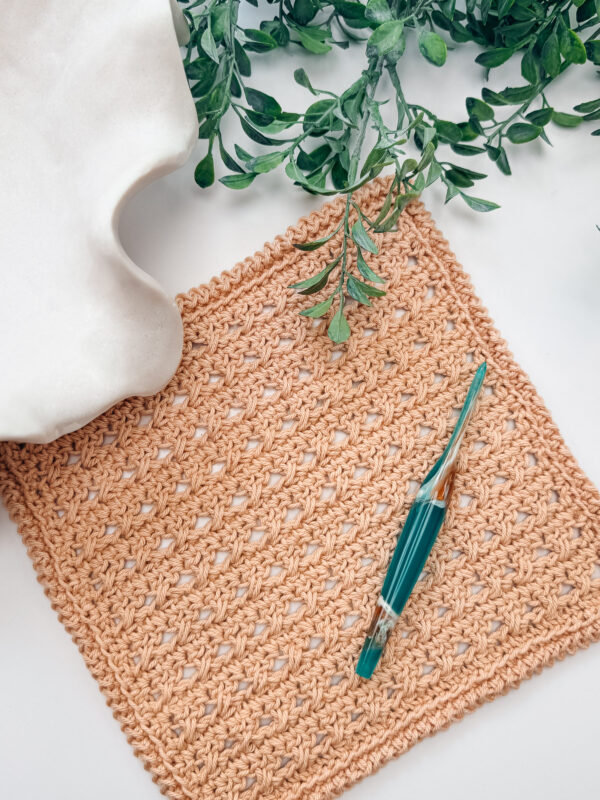
After the body is complete, you move directly into the border without cutting your yarn. The border is worked in two continuous rounds. The first round uses the Clean Single Crochet technique to even out all four edges, including the corners. The second round adds the zigzag slip stitch and chain-1 detail that gives the washcloth its finished, polished look.
There is no seaming or joining in this pattern. The whole thing, body and border, is one continuous piece. When you are done, you fasten off with an invisible join and weave in two ends.
Use your leftover cotton for some Wheat Stitch Dishtowel Holders or a Circle Leaf Water Bottle Holder.
Reed Crossover Washcloth Crochet Pattern FAQs
Can I make this washcloth in a different size?
Yes. The Reed Crossover Stitch works in multiples of 3, so you can adjust the size by increasing or decreasing your starting chain in multiples of 3. To make the washcloth larger, add 3 chains to your foundation. To make it smaller, remove 3. Keep adding rows until the length matches the width you want, or until you reach your preferred size. The yardage will increase or decrease along with the size, so plan your yarn quantities accordingly.
What if I do not have Crochet.com Dishie? What yarn can I use instead?
Any worsted-weight cotton or cotton blend will substitute well here. Herrschners Cottage Cotton, Premier Home Cotton, Lily Sugar ‘n Cream, and Village Yarn Craft Cotton are all listed as substitutes in the pattern and are widely available. The main thing to look for is a worsted-weight yarn with at least some cotton content. If your substitute yarn has slightly different yardage, you may need to adjust quantities. The small needs about 100 yards and the large needs about 200 yards, so plan from there.
Is this pattern really reversible?
Yes. The Reed Crossover Stitch creates a fabric that looks essentially the same on both sides, with slightly different texture depending on which side you choose to face outward. Because there is no defined right or wrong side to the main stitch, you can look at both sides of your finished cloth and pick whichever you prefer. This also means there is no need to track which side you are on while you work, which makes it easier to pick up and put down between sessions.
Do I need to block this washcloth?
Blocking is not required for the pattern to work or fit, but it is genuinely worth doing if you have time, especially before gifting. If you are making these for your own bathroom and plan to put them straight into use, the washing machine will do most of the work over the first few washes and the stitch will open up naturally.
How long does it take to make one washcloth?
The small washcloth takes about 1 to 2 hours for most crocheters. The large takes closer to 2 to 3 hours. If you are new to the Reed Crossover Stitch, budget a little extra time for the first couple of rows while the rhythm clicks. Once it does, the two-row repeat works up quickly. The border adds maybe 15 to 20 minutes on either size.
Can I sell finished washcloths made from this pattern?
Yes. Finished items made from Briana K Designs patterns may be sold on a small scale. Credit to Briana K Designs is appreciated but not required. You may not copy or redistribute the pattern itself, but the items you make from it are yours to keep, gift, or sell.
Subscribe, Like & Watch on YouTube
Relax & Crochet with NO Ads
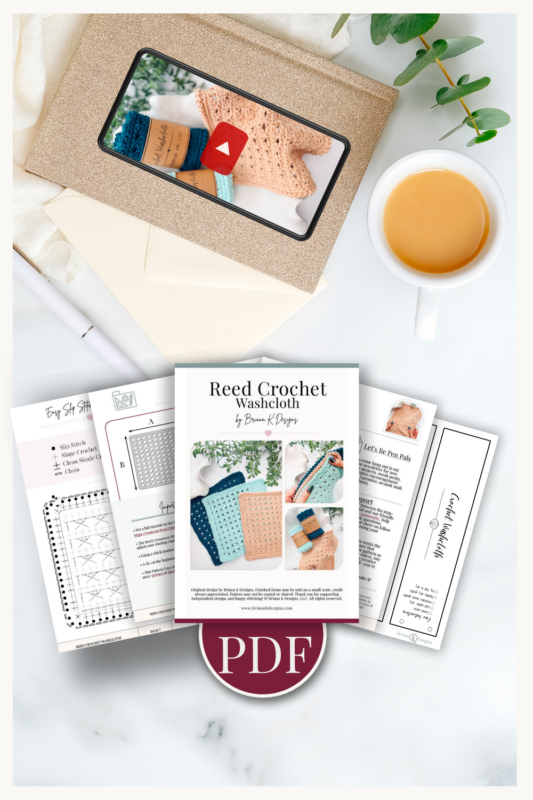
Upgrade to the Printable PDF
Beautifully formatted to print and take with you anywhere. The paid pattern includes:
Add your email in the box below to unlock this pattern to view on the blog for free. I’m thrilled to share this amazing crochet pattern with you! Please don’t copy, paste, or distribute this pattern. Prefer an ad-free experience? Purchase a digital PDF file for a small fee from one of my online stores. I appreciate your support and readership. You are why I can keep doing what I love and sharing it with others. Thank you from the bottom of my heart.
Reed Crossover Crochet Washcloth Pattern Instructions
Body
Row 1:
For a more detailed look at this border, visit this post: How to Crochet a Simple Crochet Edging.
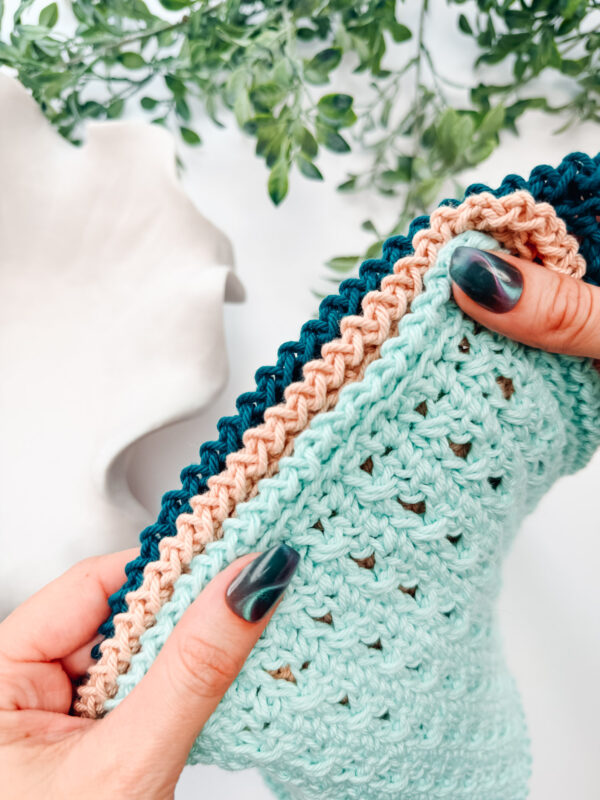
Finishing
Fasten off and create an invisible join, then weave in all ends, taking care to secure them neatly along the textured stitches for a clean, seamless finish.
More Crochet Patterns You’ll Love
If you enjoyed the Reed Crossover Stitch, here are some other textured patterns worth bookmarking.
🥂 Cheers, and happy crocheting!
Hook down? Not so fast…
I’d Love to See Yours!
You made something beautiful. Here’s how to keep it, show it off, and inspire the next maker.

What should you make next?
Keep the hook movingReaders Are Loving
 Stretchy Edging
 Crochet Book Cover
 Wheat Bottle Holder
 Petal Loop Pumpkins