

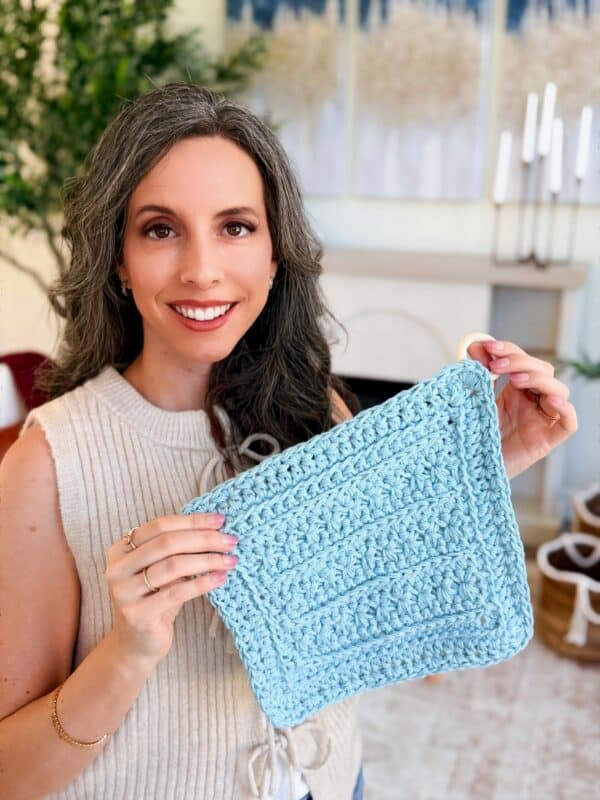
Add a touch of handmade charm to your kitchen with the Petal Loop Stitch Trivet crochet pattern, a beautifully textured and practical project that’s as fun to make as it is to use.
This trivet is worked flat in rowsusing the 4-row repeat Petal Loop Stitch, creating soft, looped “petals” across the fabric. The combination of simple stitches and unique loop construction results in a fabric that’s both visually striking and wonderfully tactile.
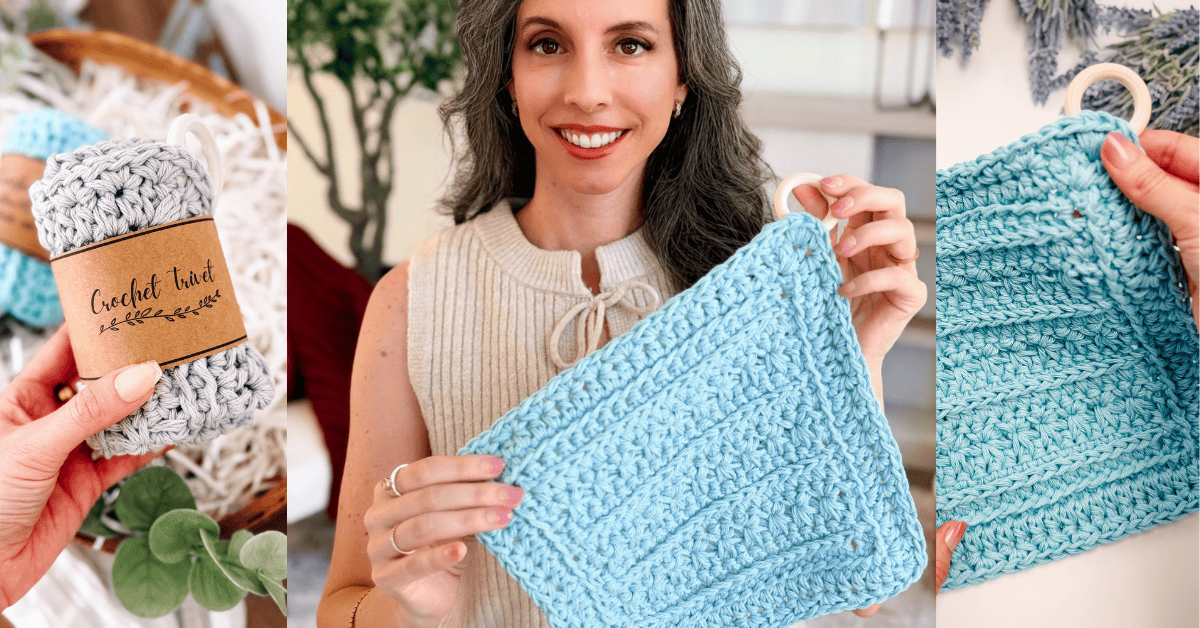
If you’ve made a Petal Loop Stitch Washcloth and wanted to try a slightly larger project, this trivet is the perfect place to start, especially since it’s worked with yarn held double, giving you extra texture and a thicker, more durable finished piece.
Whether you’re protecting your countertops or adding a cozy handmade detail to your kitchen, this trivet is a quick and satisfying project you’ll reach for again and again. And if you love texture-rich crocheted home decor, try making some coordinating Wheat Stitch™ Hotpads or Dishtowel Holders!
Disclosure: This post contains affiliate links. Please read my disclosure for more info.
What you’ll love about the Petal Loop Stitch Trivet
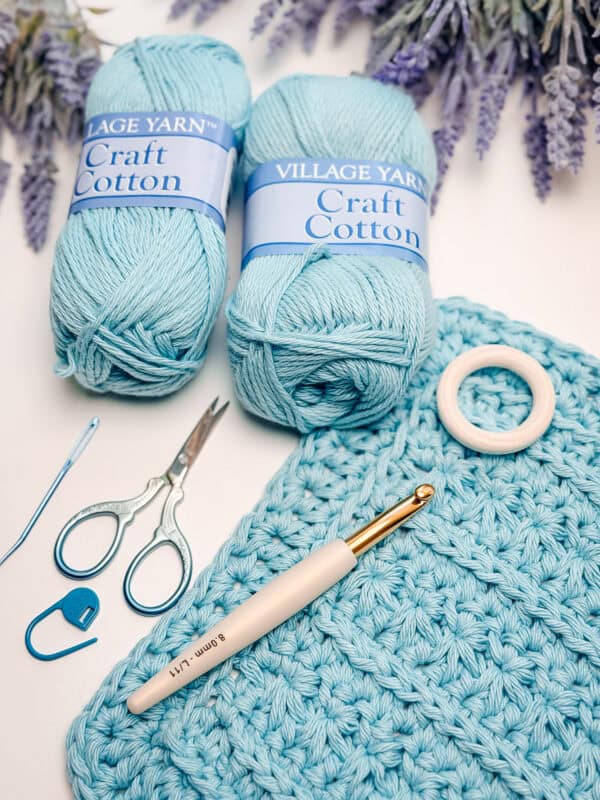
Petal Loop Stitch Crochet Trivet Supplies
Yarn
Village Yarn Craft Cotton
100% Cotton; 115yds/71g
Yarn Quantities
150 yds
Yarn Substitutions
Premier Home Cotton – 85% Recycled Cotton/15% Polyester; 131yds/75g
Lily Sugar ’n Cream Yarn – 100% Cotton; 120yds/71g
Crochet.com Dishie – 100% Cotton; 190yds/100g
Remember always to check the gauge and drape when substituting yarns.
Crochet Hook
Size US L (8.0mm) Crochet Hook or hook to obtain gauge.
Notions
Scissors
Yarn Needle
Cat Removable Stitch Marker
Tape Measure
Wooden Ring
Skill Level
Sizing
One Size – 12″ x 11″
Abbreviations
blo – back loop only
ch – chain
hdc – half double crochet
RS/WS – right side/wrong side
sc – single crochet
sl st – slip stitch
st(s) – stitch(es)
Stsc – Stacked Single Crochet
Gauge
10 sts and 8 rows = 4″ by 4″ unblocked, in pattern repeat. Not critical for this pattern.
How to Crochet A Gauge Swatch
Working a gauge swatch will let you know if you will have the correct sizing for this pattern. It will also help you practice the stitches used in this project and improve your stitch work for a flawless look.
Are you struggling to match the gauge? Check out the blog post on What is Crochet Gauge and How To Fix It
Special Stitches
Stacked Single Crochet (Stsc): Do NOT chain, insert hook into next stitch, yo, pull up a loop, yo and pull through both loops, insert hook in the vertical bar below, yo, pull up a loop, yo and pull through both loops on the hook.
3-Loop-Petal: Insert the hook into the back loop of the previously worked star (or stitch) and pull up a loop. Pull up one loop in each of the next two stitches of the previous row, for a total of four loops on the hook. Yarn over and draw through all four loops to complete the stitch.
Clean Sc: Insert your hook into the left bar of the sc st, then insert into the next row edge space. YO and pull up a loop, then pull through the first loop on the hook. YO and pull through the remaining two loops on the hook.
For a step-by-step tutorial for this straight-edge stitch, visit: How to Crochet a Straight Edge
Construction
The Petal Loop Stitch Trivet is worked flat in rows, beginning with a starting chain.
From there, the trivet is built using a repeating 4-row stitch pattern, which forms the signature looped petal texture across the fabric. Because the project is worked with yarn held double, the fabric builds quickly and creates a thick, sturdy surface that’s ideal for a trivet.
Once the main body is complete, the work is rotated, and a border is crocheted evenly around all four sides. The border helps smooth the edges and gives the trivet a clean, finished look. On the final round, a wooden ring is attached directly to the stitches, allowing you to hang your trivet for easy storage or display.
Have some leftover cotton from this project? Try the Wheat Stitch™ Napkin Ring or the Circle Leaf Water Bottle Holder.
Pattern Notes
- This pattern substitutes a traditional chain 2 on some edges for a Stacked Single Crochet. A ch 1 at the beginning of a single crochet row is unnecessary.
- For striping, work Rows 1 & 2 in one color, and Rows 3 & 4 in a different color. Change colors by yarning over with the new color when making the last stitch of the row before your new color begins. Keep both colors attached and carry the unused yarn up the back of the trivet without fastening off.
- This Pattern Uses Standard US Terminology. I use affiliate links and follow GPSR Compliance: privacy & disclosure policy.
❓ Frequently Asked Questions About the Petal Loop Stitch Trivet
Is this trivet beginner-friendly?
🧶 This pattern is best suited for easy-to-intermediate crocheters, especially those comfortable learning a new stitch pattern. A full, step-by-step tutorial for the Petal Loop Stitch can be found here: How to Crochet the Petal Loop Stitch
Can I use acrylic yarn for a trivet?
🧶 Cotton yarn is strongly recommended because it handles heat better. Acrylic yarn can melt under high temperatures, so it’s not ideal for hot dishes.
Why is cotton yarn best for a crochet trivet?
🧶 Cotton yarn is heat-resistant. It also holds its shape well and withstands repeated use, making it ideal for kitchen items. Most cotton yarns are machine washable, making your trivet easy to clean after everyday use. Plus, they’re eco-friendly! Cotton yarns are also affordable and easy to find.
Why is the yarn held double?
🧶 Holding yarn double creates a thicker, more durable fabric, which is important for protecting surfaces from heat.
Can I make this in different sizes?
🧶 The pattern is written for one size, but you can adjust the starting chain and rows to customize the size if desired.
Is this a good project for gifts?
🧶 Absolutely! Crochet trivets make excellent housewarming gifts, hostess gifts, and handmade kitchen sets.
What is a crochet trivet used for?
🧶 A crochet trivet is a protective pad that sits between hot dishes and your table or countertop. Because this trivet is worked with thick, double-stranded yarn, it creates a sturdy fabric that helps protect surfaces from heat while adding a decorative, handmade touch.
You can use a crochet trivet for:
• protecting countertops from hot pans
• placing under serving dishes
• decorating your table or kitchen
• layering into farmhouse-style décor
• gifting as part of a handmade kitchen set.
How long does it take to crochet a trivet?
🧶 Estimated time: 2-4 hours. This is one of those wonderfully quick projects that gives you instant gratification. Because the trivet is worked with yarn held double, it builds faster than many single-strand projects.
Tips for Speeding Up Your Project
🧶 Use smooth yarn to keep your stitches flowing easily
🧶 Work in good lighting to see the loops clearly
🧶 Set small goals (a few rows at a time)
🧶 Treat it as a relaxing, low-pressure project
A Better Way to Crochet Beautiful Texture
If you love richly textured crochet stitches like the star stitch, the Petal Loop Stitch is one you’ll want to keep in your rotation.
It creates a beautifully layered fabric with soft, looped details that add depth and movement, without feeling overly complicated to crochet.
Many crocheters find that once they learn the repeat, the stitch becomes rhythmic and relaxing, making it perfect for projects like this trivet, where you can enjoy the process while watching the texture build.
Subscribe & Like
Video Tutorial for the Petal Loop Stitch Crochet Trivet
Relax & Crochet
Upgrade to the Printable PDF
Beautifully formatted to print and relax while crocheting. The paid pattern includes:
The Ad-Free PDF can be purchased on Etsy or Ravelry.
Add your email in the box below to unlock this pattern to view on the blog for free. I’m thrilled to share this amazing crochet pattern with you! Please don’t copy, paste, or distribute this pattern. Prefer an ad-free experience? Purchase a digital PDF file for a small fee from one of my online stores. I appreciate your support and readership. You are why I can keep doing what I love and sharing it with others. Thank you from the bottom of my heart.
Printable Version
This pattern is free to read here on the blog. The ad-free printable PDF is available in the Briana K Designs shop on Etsy and Ravelry.
brianakdesigns.com
Petal Loop Stitch Trivet Written Crochet Pattern Instructions
Repeats
Rnd 2:
Ch 1, sc in first, 3 hdc sts in next, hdc until the next corner st, *3 hdc in the corner st, hdc until the next corner; repeat from * around and join. | 84 sts
Rnd 3:
Ch 1, 2 sc in the first st, skip the next st, *2 sc in the next st, skip the next st; repeat from * evenly around the edges of the trivet, working 3 sts in each corner, until the very last corner. On the final corner, work the stitches around the wooden ring if adding one. See the video tutorial for detailed instructions.
Join The Kindest Community
Join our vibrant community of crafters on Facebook today. Whether you enjoy crafting with others or simply have burning questions, we’ve got you covered – join us now!
Finishing
Fasten off and create an invisible join. Then weave in all ends, taking care to secure them neatly along the textured stitches for a clean, seamless look.
The Petal Loop Stitch Trivet is the perfect blend of texture, function, and quick satisfaction. With its beautiful stitch pattern, sturdy construction, and practical use, it’s a project you’ll enjoy making and actually using in your home. Caring for a crocheted trivet is simple – just wash according to the yarn label instructions, dry, and reuse!
Looking for more eco-friendly projects?
Summer House Crochet Bag
Moss Stitch Washcloth
Wheat Stitch™ Mug Cozy
Wreath Coaster
Circle Leaf Market Bag
Cheers, and happy crocheting!
Hook down? Not so fast…
I’d Love to See Yours!
You made something beautiful. Here’s how to keep it, show it off, and inspire the next maker.

What should you make next?
Keep the hook movingReaders Are Loving
 Crochet Book Cover
 Wheat Stitch Wreath
 Petal Loop Pumpkins
 Wheat Ripple Blanket